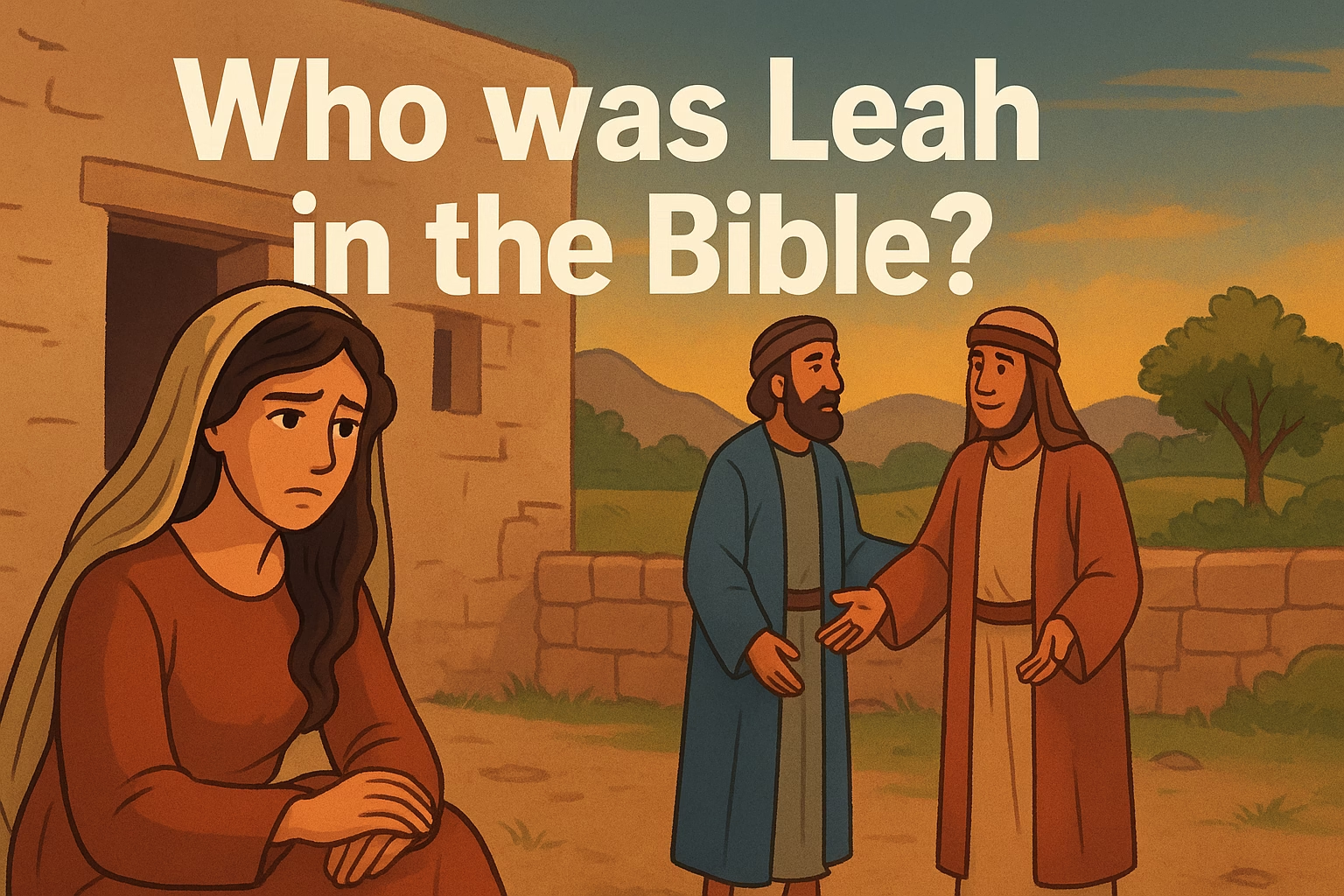
In the Bible, Leah is a significant figure whose story unfolds in the Book of Genesis. Her life is intertwined with themes of love, rivalry, and family dynamics, particularly in the context of her relationship with her sister Rachel and her husband Jacob. Understanding Leah’s role provides insight into the complexities of familial relationships and God’s purpose in using individuals from all walks of life.
Leah was the first wife of Jacob, a key patriarch in the biblical narrative. She was the daughter of Laban and the sister of Rachel, Jacob’s favored wife. Leah’s story begins in Genesis 29, where we learn that Jacob fell in love with Rachel and agreed to work for Laban for seven years in exchange for her hand in marriage. However, Laban deceived Jacob by giving him Leah instead on their wedding night, as she was the older sister. This act of deception set the stage for a tumultuous family dynamic that would have lasting effects.
Leah’s Background and Family
Leah was born into a family that valued the beauty of her younger sister Rachel over her own. Genesis 29:17 describes Leah as having “weak eyes,” which many interpret as a reference to her lack of physical beauty compared to Rachel. This perceived inferiority may have contributed to Leah’s feelings of inadequacy and desire for love and acceptance.
Leah’s father, Laban, played a crucial role in her life, as he was the one who orchestrated the marriage to Jacob. In a culture where arranged marriages were common, Leah’s destiny was largely shaped by her father’s decisions. This context helps to understand Leah’s position within her family and her eventual struggle for Jacob’s affection.
Leah’s Marriage to Jacob
When Jacob discovered that he had married Leah instead of Rachel, he was understandably upset. Laban justified his actions by stating that it was not customary to marry off the younger daughter before the elder. As a result, Jacob agreed to work another seven years for Rachel, thus marrying both sisters (Genesis 29:26-30). This arrangement led to significant tension and rivalry between Leah and Rachel.
Leah’s marriage to Jacob was marked by her longing for his love. She bore him several children, hoping that each birth would win Jacob’s affection. Leah’s first son, Reuben, was named with the hope that Jacob would love her: “Because the Lord has seen my misery. Surely my husband will love me now” (Genesis 29:32). Despite her efforts, Jacob’s heart remained with Rachel, leading Leah to experience deep emotional pain.
Leah’s Children and Their Significance
Leah gave birth to six sons and a daughter, each with names that reflected her feelings and hopes. Her children were:
- Reuben: “See, a son!”
- Simeon: “One who hears.”
- Levi: “Attached.”
- Judah: “Praise.”
- Issachar: “Wages.”
- Zebulun: “Honor.”
- Dina: (daughter)
Each name tells a story of Leah’s struggles and her desire for recognition and love. For instance, Judah’s name signifies Leah’s ultimate realization that she should praise God regardless of her circumstances. Leah’s children would play significant roles in the future of Israel, with Judah becoming the line from which King David and ultimately Jesus would come.
Leah’s Relationship with Rachel
The rivalry between Leah and Rachel further complicated Leah’s life. Rachel, who was unable to bear children initially, envied Leah’s fertility. In a desperate attempt to gain Jacob’s love, Rachel offered her maid, Bilhah, to Jacob as a concubine. This led to further competition, as Leah responded by giving her maid, Zilpah, to Jacob as well (Genesis 30:3-9). The situation escalated into a fierce struggle for Jacob’s affection, with both sisters vying for his attention through their children.
Despite the strife, Leah’s faith and resilience shine through her story. She continued to seek God’s favor and ultimately found her identity in her relationship with Him, rather than solely in Jacob’s love. Leah’s legacy is not only defined by her struggles but also by her faithfulness and the significant role she played in the lineage of Israel.
Leah’s Faith and Spiritual Journey
Leah’s life is not only marked by her relationships but also by her spiritual journey. Throughout her struggles for love and recognition, she often turned to God. Leah’s experiences illustrate how faith can be a source of strength amid adversity. In her quest for Jacob’s affection, Leah learned to rely on God’s promises and providence.
After the birth of her fourth son, Judah, Leah proclaimed, “This time I will praise the Lord” (Genesis 29:35). This declaration signifies a turning point in Leah’s spiritual life, where she began to find her worth and identity in her relationship with God rather than in her husband’s love. Leah’s shift from seeking Jacob’s approval to praising God reflects a deeper understanding of her value as a person created in God’s image.
Leah’s Legacy in the Bible
Leah’s legacy is significant in the biblical narrative. Her children formed the tribes of Israel, which would become foundational to the nation of Israel. Judah, her fourth son, is particularly noteworthy as he became the ancestor of King David and ultimately Jesus Christ. This lineage emphasizes God’s ability to work through imperfect people and situations to fulfill His divine plan.
In addition to her biological contributions to Israel’s lineage, Leah’s story is a testament to resilience and faith. Her life demonstrates that God can use individuals who feel overlooked or unloved to accomplish great things. Leah’s experiences resonate with many who struggle with feelings of inadequacy or rivalry, reminding them that their worth is not defined by others but by their relationship with God.
Leah’s Later Life and Death
Although the Bible does not provide extensive details about Leah’s later life, it is known that she was buried in the Cave of Machpelah alongside Jacob, Abraham, and Sarah (Genesis 49:31). This burial site is significant because it represents the familial bond that Leah maintained with Jacob despite the complexities of their marriage. It also underscores her importance in the lineage of the patriarchs, affirming her place in God’s covenant with Abraham and his descendants.
In the context of Leah’s life, her burial in this revered location serves as a reminder that her contributions to the family and the nation of Israel were recognized and honored by God. Leah’s story, while marked by struggle, ultimately reflects a journey towards acceptance and purpose within the divine plan.
Lessons from Leah’s Life
Leah’s life offers several important lessons for modern readers. Firstly, her story emphasizes the value of inner beauty and character over outward appearance. Leah, often perceived as less attractive than Rachel, shows that true worth is found in one’s heart and faithfulness rather than physical attributes.
Secondly, Leah’s experiences highlight the importance of faith in God during challenging times. Her journey encourages believers to seek God’s presence and guidance, especially when feeling overlooked or unloved. Leah’s shift towards praising God illustrates that true fulfillment comes from a relationship with Him rather than from human validation.
Finally, Leah’s legacy serves as a reminder that God can use anyone, regardless of their circumstances or societal status, to fulfill His purposes. Leah’s story is a powerful testimony to God’s grace and the transformative power of faith, inspiring individuals to trust in God’s plan for their lives, even when faced with adversity.
Conclusion: Leah’s Impact on Biblical Narrative
Leah’s life is a rich tapestry of love, rivalry, faith, and resilience. Through her struggles, she not only contributed to the lineage of Israel but also left a legacy of faith that continues to inspire. Leah’s story encourages readers to reflect on their own lives, consider their worth in God’s eyes, and recognize that their struggles can be transformed into a testimony of faith and hope.
Leah’s journey reminds us that God sees and values each individual, regardless of their circumstances. Her legacy is not merely about her role as a wife and mother but also about her faithfulness to God, which ultimately shaped the course of biblical history.
For those interested in exploring more about significant women in the Bible, consider reading about Saul’s wife and her impact, or learn about Tamar’s importance in the biblical narrative.