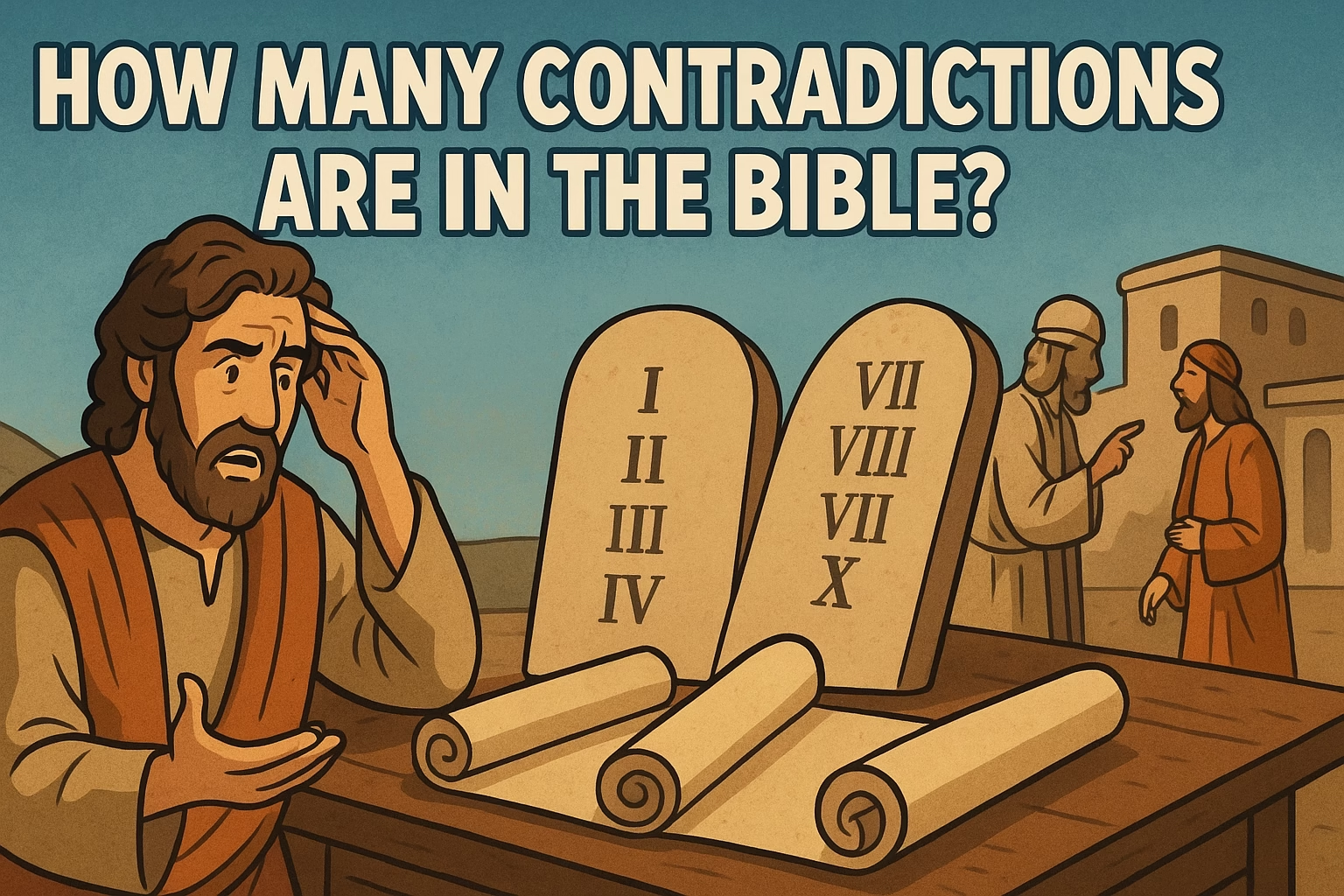
The question of contradictions in the Bible is a topic that has sparked much debate among scholars, theologians, and believers. Some claim that the Bible contains numerous contradictions, while others argue that what appears to be contradictions can often be resolved through deeper understanding and context. This article aims to explore the nature of these supposed contradictions and provide clarity on this complex issue.
When addressing the question of how many contradictions exist in the Bible, it is essential to understand that the answer is not straightforward. The perception of contradictions often arises from differing interpretations and the complexities of translation. Many scholars assert that there are no true contradictions in the Bible, while others point to specific passages that seem to conflict. Ultimately, the count of contradictions can vary greatly depending on one’s perspective and approach to biblical texts.
Understanding Biblical Context
To assess the presence of contradictions, one must first consider the context in which the Scriptures were written. The Bible comprises various genres, including history, poetry, prophecy, and letters, each with its own style and purpose. This diversity means that different books may present events or teachings differently without necessarily contradicting one another.
For example, the four Gospels (Matthew, Mark, Luke, and John) provide distinct accounts of Jesus’ life and ministry. While the narratives may differ in detail, they collectively contribute to a fuller understanding of His message and mission. These variations do not inherently indicate contradictions but rather reflect the unique perspectives of each author.
Different Interpretations and Translation Issues
Another factor contributing to perceived contradictions is the translation of biblical texts. The Bible has been translated into numerous languages, and each translation may emphasize different aspects of the original language. This can lead to variations in wording and meaning, which might appear contradictory at first glance.
For instance, in the book of Matthew, Jesus is quoted as saying, “If your hand or your foot causes you to sin, cut it off and throw it away” (Matthew 18:8, NLT). Some might interpret this as a literal command, while others see it as a metaphor for the seriousness of sin. The interpretation chosen can significantly impact how one views the text and any potential contradictions.
Examples of Perceived Contradictions
While many assert that there are no contradictions in the Bible, some commonly cited examples include:
- The Genealogy of Jesus: Matthew 1:1-17 and Luke 3:23-38 provide different genealogies for Jesus. Critics argue that these conflicting lists suggest a contradiction. However, scholars point out that Matthew traces Jesus’ lineage through Joseph, emphasizing His legal right to the throne of David, while Luke traces it through Mary, highlighting His biological lineage.
- The Death of Judas: In Matthew 27:5, Judas Iscariot hangs himself after betraying Jesus. In contrast, Acts 1:18 describes Judas falling headlong and bursting open. Some interpret these accounts as contradictory, while others suggest they may be complementary, detailing different aspects of the same event.
- The Resurrection Accounts: The Gospels present varying details about the resurrection of Jesus, such as who arrived at the tomb and what they encountered. While some see these differences as contradictions, others argue that they reflect the different perspectives of the witnesses involved.
The Role of Culture and Historical Context
Understanding the cultural and historical backdrop of biblical texts is also crucial in addressing perceived contradictions. The Bible was written over centuries in various cultural contexts, and certain practices or beliefs may not align with modern understanding. This can lead to interpretations that seem contradictory from a contemporary viewpoint.
For example, the Old Testament contains laws and practices that were culturally relevant to ancient Israel but may not apply in the same way today. The interpretation of these texts requires careful consideration of the historical context in which they were written.
Theological Perspectives on Contradictions
Different theological perspectives also influence how one views contradictions in the Bible. Some denominations uphold a literal interpretation of Scripture, which may lead to a belief in contradictions if texts appear to conflict. Others adopt a more metaphorical approach, seeing the Bible as a collection of inspired writings that convey deeper truths rather than strict historical accounts.
This diversity in interpretation underscores the importance of studying Scripture in community and seeking guidance from trusted teachers and scholars. Engaging with varying perspectives can enrich one’s understanding and help clarify complex passages.
Conclusion of Part One
In summary, the question of how many contradictions exist in the Bible cannot be answered definitively. Many perceived contradictions stem from differing interpretations, translation issues, and the diverse cultural contexts of the biblical texts. As readers approach the Scriptures, it is essential to consider these factors and engage with the texts thoughtfully. Understanding the Bible’s complexity can lead to a deeper appreciation of its teachings and the message it conveys.
Examining Specific Contradictions
To further understand the nature of contradictions in the Bible, it is valuable to look at specific examples that have been debated by scholars and theologians. By examining these instances, we can appreciate how context and interpretation shape our understanding of Scripture.
The Creation Accounts
In Genesis, there are two accounts of creation that have often been viewed as contradictory. Genesis 1 describes the creation of the world in six days, culminating with humanity created last on the sixth day. However, Genesis 2 focuses on the creation of man first, with the woman created afterward from man’s rib. Critics argue that these differing sequences indicate a contradiction. Yet many theologians suggest that these accounts serve different purposes: the first offers a cosmic overview, while the second provides a more intimate look at humanity’s origins and relationship with God.
The Timing of the Crucifixion
Another often-cited example is the timing of Jesus’ crucifixion. In Mark 15:25, it states that Jesus was crucified at the third hour, while John 19:14 indicates that it was about the sixth hour when Jesus was presented to be crucified. Some view this discrepancy as a contradiction regarding the timeline of events. However, scholars propose that Mark may be using Jewish timekeeping, while John uses Roman time, which could account for the difference in hours.
God’s Nature and Actions
The portrayal of God’s nature in various texts can also lead to perceived contradictions. For example, in Exodus 34:14, God is described as a jealous God, while in 1 John 4:8, it states that God is love. Some readers may struggle to reconcile these two aspects of God’s character. However, many theologians argue that God’s jealousy is rooted in His desire for a faithful relationship with His people, emphasizing His passion for justice and love rather than a conflicting nature.
Scholarly Approaches to Contradictions
Scholars often employ various methodologies to address contradictions in the Bible. Textual criticism examines the manuscripts to understand how texts may have evolved over time, while historical criticism looks at the historical context to clarify potential discrepancies. These methods can provide valuable insights into why certain passages may appear contradictory and how they can be understood within their original settings.
Additionally, literary criticism analyzes the different genres and styles of writing in the Bible, helping to uncover the intended messages of the authors. By employing these approaches, scholars can often provide resolutions or alternative interpretations of difficult passages, showing that the perceived contradictions may not be as clear-cut as they first appear.
The Importance of Community in Interpretation
Engaging with the Bible within a community is crucial for navigating its complexities. Different perspectives can shed light on challenging texts and contribute to a more nuanced understanding of Scripture. Church traditions, teachings, and scholarly works can offer insights that may not be immediately apparent to individual readers. By discussing these texts in small groups or study settings, believers can explore their interpretations and learn from one another.
Moreover, seeking guidance from trusted leaders and theologians can help clarify difficult passages. Many churches provide resources such as study guides, sermons, and workshops aimed at deepening understanding of the Bible while addressing common questions about contradictions.
Faith and Doubt in the Face of Contradictions
For many believers, encountering perceived contradictions can be a source of doubt or confusion. However, it is essential to recognize that faith often involves grappling with difficult questions. Rather than shying away from these challenges, believers are encouraged to embrace them as opportunities for growth.
Wrestling with doubts can lead to a deeper faith, as individuals seek answers and engage more fully with the text. Many have found that through honest inquiry and exploration, their understanding of God and His Word becomes richer and more profound.
Final Thoughts on Contradictions in the Bible
In conclusion, the question of how many contradictions exist in the Bible is complex and multifaceted. While some passages may appear contradictory at first glance, many of these discrepancies can be understood through careful examination of context, interpretation, and cultural background. The richness of the biblical text invites readers to explore, question, and deepen their understanding.
As believers engage with the Scriptures, it is crucial to approach them with an open mind and heart, recognizing that the journey of understanding is often just as significant as the answers themselves. Embracing the complexities of the Bible can lead to a more profound appreciation of its teachings and the timeless truths it offers.
For further exploration of how the Bible has been changed over time, you can read about it in this article: Has the Bible Been Changed? Additionally, if you are curious about the different versions of the Bible and their implications, check out Why Are There Different Versions of the Bible?.