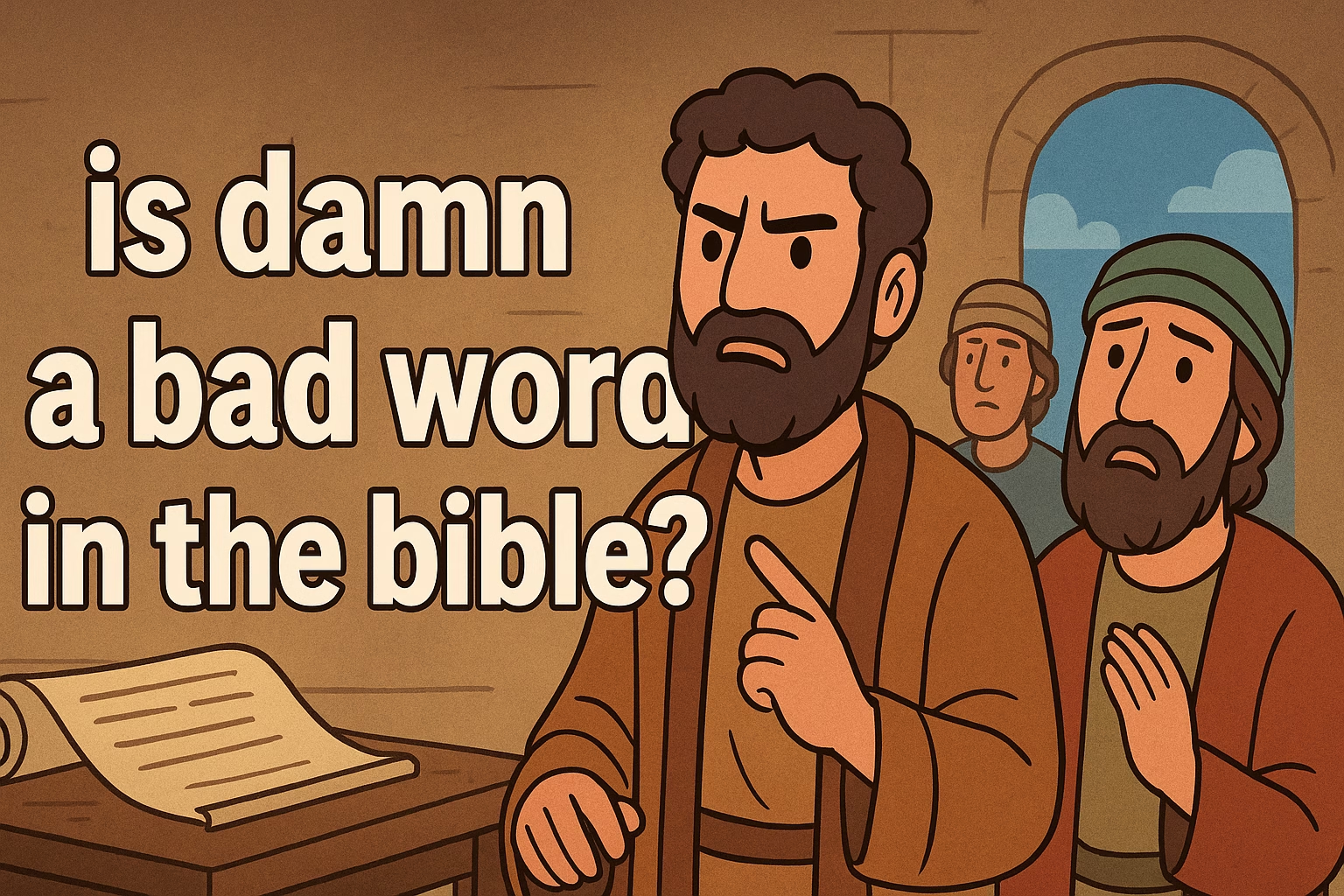
The question of whether “damn” is a bad word in the Bible requires a closer look at the context in which the term is used. Language evolves, and what might have been considered offensive or inappropriate in one era may not have the same connotation today. To understand the implications of the word “damn” within the biblical framework, we must examine relevant Scripture passages and their meanings.
In direct answer to the question, “damn” as a term does appear in the Bible, but its usage and implications differ from contemporary understandings of the word. The term typically refers to the act of condemning someone to eternal punishment or damnation. The Bible discusses judgment and the fate of the unrighteous, but it does not use the word “damn” in the same casual or flippant way that people might today.
The Biblical Concept of Damnation
The concept of damnation in the Bible is serious and profound. It relates to the ultimate judgment of God on the unrepentant sinner. Several passages address this, particularly in the New Testament. For instance, in Matthew 25:46, Jesus mentions, “And they will go away into eternal punishment, but the righteous will go into eternal life.” This clearly indicates a separation between the righteous and the unrighteous, culminating in eternal consequences.
In Romans 6:23, Paul writes, “For the wages of sin is death, but the free gift of God is eternal life through Christ Jesus our Lord.” Here, Paul contrasts the consequences of sin with the grace offered through Jesus. The notion of death here can be interpreted as spiritual separation from God, which is a form of damnation.
Language and Context
Understanding the context of language used in Scripture is crucial. The Bible was originally written in Hebrew, Aramaic, and Greek, and translations into English have varied over time. The term “damn” as we know it today does not directly translate from these original languages. Instead, words like “condemn,” “curse,” or “judgment” are often used in the biblical texts. For example, in John 3:18, it states, “There is no judgment against anyone who believes in him. But anyone who does not believe in him has already been judged for not believing in God’s one and only Son.” This illustrates the idea of condemnation without using the word “damn.”
Jesus and the Use of Strong Language
While Jesus often spoke about judgment, condemnation, and hell, He did not use the term “damn” in His teachings. Instead, He focused on the importance of repentance, forgiveness, and love. For example, in Luke 9:56, He states, “For the Son of Man came to seek and save those who are lost.” This highlights His mission to save rather than to condemn. Jesus emphasized the transformative power of grace and the invitation to a relationship with God rather than the focus on damnation.
Modern Implications
In modern times, the word “damn” can carry various meanings and connotations depending on the context. Some might use it lightly in casual conversation, while others regard it as a serious curse. In the context of Christian faith, using the term lightly could be seen as diminishing the weight of the concepts of judgment and salvation discussed in the Bible.
It’s essential to consider how language impacts our understanding of spiritual truths. Using terms that carry significant weight should be approached with caution, especially when discussing matters of faith, salvation, and eternal consequences.
Religious Traditions and Interpretations
Different Christian denominations may have varying views on the appropriateness of the word “damn.” Some may view it as a profanity that should be avoided, while others might see it as a legitimate expression of biblical concepts. The key is to align our language with the teachings of Scripture and to be mindful of the effect our words have on ourselves and others.
In many traditional Christian contexts, using the term “damn” in a flippant way could be frowned upon. The focus in such communities is often on uplifting language that promotes love, grace, and understanding rather than condemnation.
The Role of Judgment in Christianity
Judgment is a significant theme in Christianity, but it is often accompanied by the message of hope and redemption. For instance, in 2 Peter 3:9, it states, “The Lord isn’t really being slow about his promise, as some people think. No, he is being patient for your sake. He does not want anyone to be destroyed, but wants everyone to repent.” This emphasizes God’s desire for mercy rather than judgment.
Understanding the balance between judgment and grace is essential for Christians. The notion of damnation should not be taken lightly, as it reflects the serious consequences of rejecting God’s love and grace. However, the emphasis of the New Testament remains on the hope offered through faith in Jesus Christ.
In summary, while “damn” does appear in discussions of biblical judgment and condemnation, it is vital to approach the term with an understanding of its weight and implications. The Bible presents a message that emphasizes grace, repentance, and the transformative power of faith, which should guide our use of language in discussions of spiritual matters.
“`html
The Importance of Intent and Attitude
When considering the use of the word “damn,” it is essential to reflect on the intent behind its usage. In communication, the heart and attitude of the speaker play a significant role in how words are received. The Bible teaches about the importance of our words and how they reflect our inner thoughts and beliefs. For instance, in Matthew 12:34, Jesus states, “For whatever is in your heart determines what you say.” This verse suggests that the intention behind our words can be more telling than the words themselves.
Using strong language, including “damn,” can indicate frustration or anger, which may not align with the fruit of the Spirit as described in Galatians 5:22-23. The challenge is to express ourselves in ways that honor God and reflect His love rather than resorting to language that may be perceived as harsh or condemning. This perspective encourages believers to choose their words carefully and consider the impact they have on their witness to others.
Exploring the Nature of Cursing
The Bible addresses the concept of cursing and the power of words. In James 3:9-10, it says, “Sometimes it praises our Lord and Father, and sometimes it curses those who have been made in the image of God. And so blessing