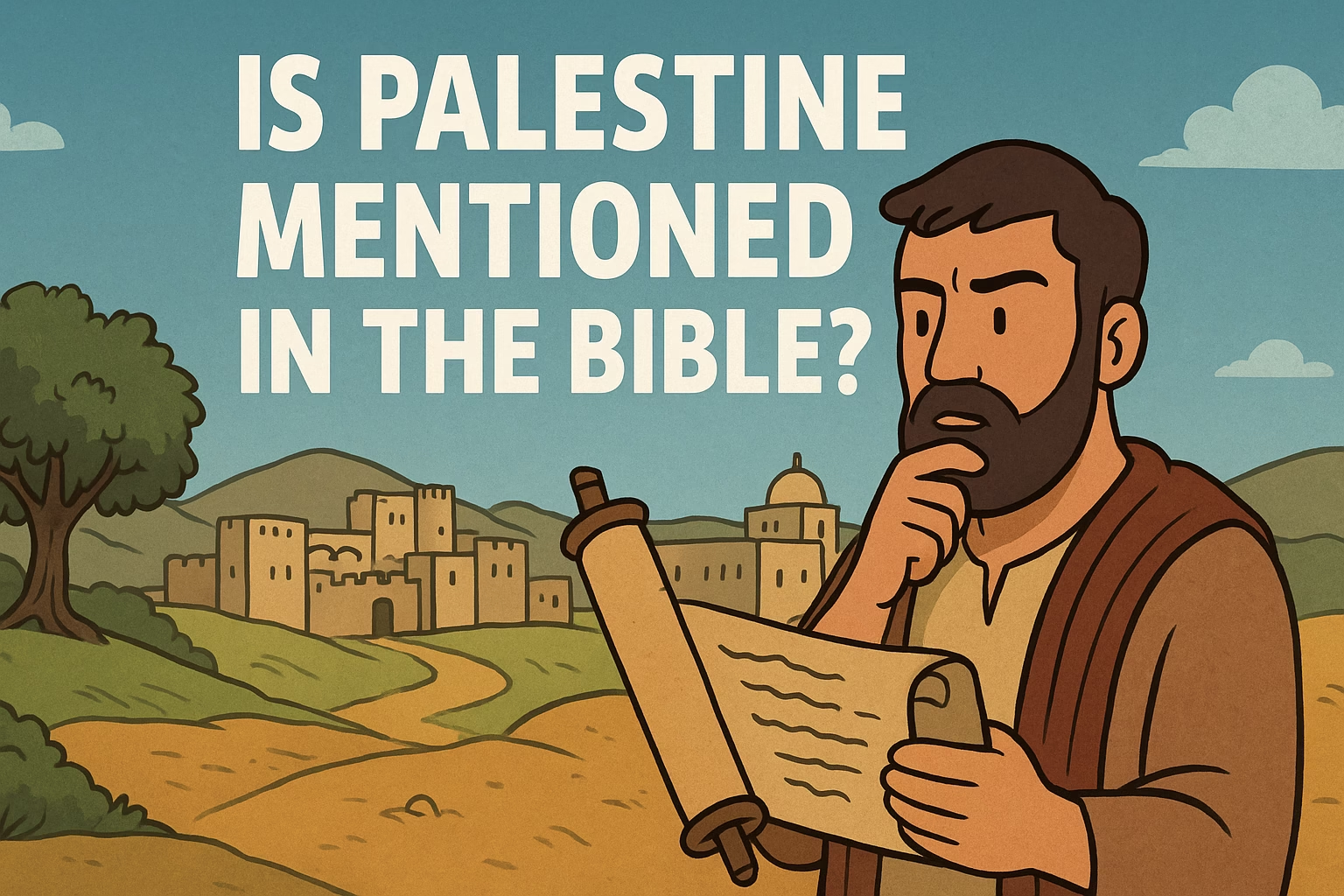
The question of whether Palestine is mentioned in the Bible often arises in discussions about the historical and geographical context of biblical events. Understanding this requires exploring the terminology and regions referred to in ancient texts, as well as how they relate to modern nomenclature. This article will delve into the biblical references to regions that encompass what is now known as Palestine, examining the historical and scriptural contexts of these mentions.
To address the question directly: the term “Palestine” as we know it today does not appear in the Bible. However, the lands that comprise modern-day Palestine, including areas such as Judea, Samaria, and parts of Galilee, are frequently referenced throughout the Scriptures. These regions were significant in biblical times and form the backdrop for many key events in both the Old and New Testaments.
Historical Context of the Term “Palestine”
The name “Palestine” is derived from “Philistia,” the land of the Philistines, who were one of the ancient peoples inhabiting the coastal regions of present-day Israel and Gaza. The term began to be used more broadly during the Roman period. In 135 AD, after the Bar Kokhba revolt, the Romans renamed Judea to “Judea Province” and later referred to the region as “Palaestina” in an effort to minimize Jewish identification with the land. This was a political move rather than a geographical designation familiar to the biblical writers.
References to Regions in the Bible
While “Palestine” itself is not mentioned, the Bible does refer to several key regions that overlap with what is now considered Palestine. Here are some of the most significant:
Judea
Judea is one of the most frequently mentioned regions in the Bible. It is the area where Jerusalem, the central city of Jewish worship and culture, is located. In the New Testament, Judea is often referred to in the context of Jesus’ ministry. For example, Matthew 2:1 states, “Jesus was born in Bethlehem in Judea, during the reign of King Herod.” This establishes Judea as a significant location in the life of Jesus.
Samaria
Samaria, located to the north of Judea, is another important biblical region. It was the capital of the Northern Kingdom of Israel and is mentioned in various contexts throughout both the Old and New Testaments. In John 4:4-5, it is noted that Jesus had to go through Samaria on his way to Galilee, which highlights its geographical and cultural significance during His time.
Galilee
Galilee, situated to the north of Judea, is also frequently mentioned in the Bible, particularly in the New Testament. This region is known for being the home of Jesus during His early life and the site of much of His ministry. For instance, Matthew 4:12-16 refers to a prophecy fulfilled when Jesus began His ministry in Galilee, highlighting its importance in the narrative of His life.
Philistia and the Philistines
The Philistines were a significant group in the biblical narrative, and their territory is often associated with the coastal region that is part of modern-day Palestine. The Old Testament describes various interactions between the Israelites and the Philistines, including notable figures like Goliath, who was a Philistine champion (1 Samuel 17). The presence of the Philistines illustrates the complex historical dynamics of the region.
Significance of the Regions in Biblical Narrative
The regions mentioned in the Bible are not only geographical locations but also hold deep spiritual and cultural significance. They serve as the backdrop for God’s covenant with His people, the life of Jesus, and the early church’s expansion. Understanding these areas helps provide context for the events that shaped biblical history.
It is important to note that while modern political terms and borders may influence our understanding of these ancient texts, the biblical authors wrote with a different cultural and historical lens. Therefore, interpreting these passages requires careful consideration of the historical context in which they were written. The regions mentioned in the Bible reflect a rich tapestry of history that continues to influence the identity of the area today.
Theological Implications
The theological implications of these biblical regions are profound. They are central to the narrative of redemption and the unfolding of God’s plan for humanity. The land itself is often viewed as part of the covenant between God and His people, representing not just physical territory but also spiritual significance. For instance, the Promised Land is a recurring theme in the Old Testament, symbolizing God’s faithfulness and the fulfillment of His promises.
Moreover, the New Testament emphasizes the spread of the Gospel through these regions, showcasing how the message of Christ transcended cultural and geographical boundaries. The early church’s mission, as seen in the Book of Acts, extends beyond Judea and Samaria to the ends of the earth, fulfilling Jesus’ command in Matthew 28:19-20 to make disciples of all nations.
In summary, while the term “Palestine” is not explicitly mentioned in the Bible, the regions that comprise it are deeply woven into the fabric of biblical history and theology. Understanding these areas provides valuable insight into the narratives and teachings of Scripture, allowing for a richer appreciation of the biblical texts and their implications for faith and practice today.
Geographical and Cultural Landscape of Biblical Times
To fully grasp the significance of the regions associated with modern Palestine, it is essential to consider the geographical and cultural landscape during biblical times. The area was characterized by a diverse array of peoples, cultures, and religions, each contributing to the rich historical tapestry found in the Scriptures.
Ancient Palestine was situated at the crossroads of several major trade routes, which facilitated interactions between different civilizations, including the Egyptians, Assyrians, Babylonians, and later the Romans. This resulted in a melting pot of cultural influences that shaped the worldview of the biblical authors and the societies in which they lived.
In the Old Testament, the Israelites were often in conflict with neighboring nations, such as the Moabites, Ammonites, and Edomites. These interactions influenced not only the political landscape but also the spiritual and moral teachings found in the Scriptures. For example, the narrative of the Israelites’ conquest of Canaan in the Book of Joshua reflects the challenges they faced in establishing their identity and faith in a land filled with diverse peoples and practices.
Modern Implications of Ancient Regions
The historical regions mentioned in the Bible have modern implications that extend beyond geographic boundaries. The ongoing Israeli-Palestinian conflict, for example, is deeply rooted in the historical narratives and claims to the land that are echoed in biblical texts. Understanding the biblical context can inform contemporary discussions about identity, heritage, and peace in the region.
Many people today look to the Bible for guidance and insight regarding the current situation in the land. This raises important questions about how faith communities interpret the Scriptures in light of modern events. Are the promises made to Abraham regarding the land still relevant today? How do we understand the concept of the Promised Land in the context of a divided region? These questions reflect the ongoing struggle to reconcile ancient texts with contemporary realities.
Exploring the Role of Jerusalem
Jerusalem, located in Judea, holds particular significance in both the Old and New Testaments. It is often referred to as the “City of God” and has been a focal point for worship and pilgrimage throughout biblical history. The city is the site of Solomon’s Temple, which represented the dwelling place of God among His people (1 Kings 6). Additionally, it is where major events in the life of Jesus unfolded, including His crucifixion and resurrection.
In the New Testament, Jesus’ lament over Jerusalem (Luke 19:41-44) highlights His deep connection to the city and its people. This emotional moment emphasizes the spiritual significance of Jerusalem and its pivotal role in God’s redemptive plan. Understanding the historical and theological context of Jerusalem can help believers appreciate its importance in the biblical narrative and its ongoing relevance in discussions about faith and identity.
Looking at Prophetic Literature
Prophetic literature in the Bible often reflects the struggles and hopes of the people living in the regions that now constitute Palestine. Prophets like Isaiah, Jeremiah, and Ezekiel addressed the social and spiritual issues of their times, calling the people to repentance and faithfulness to God. Their messages often included references to the land and its significance in God’s plan for restoration.
For instance, Isaiah speaks of a future hope for Jerusalem, where peace and righteousness will prevail (Isaiah 65:17-25). Such prophetic visions have inspired many throughout history, offering hope amid turmoil. Today, these prophecies can lead to meaningful discussions about the role of faith in seeking justice and reconciliation in the region.
Questions for Reflection
As we consider the relationship between the biblical text and modern Palestine, several questions emerge that can deepen our understanding and encourage thoughtful dialogue:
- How can the historical context of biblical regions inform our understanding of current events in the Middle East?
- In what ways do the themes of conflict and reconciliation in the Bible speak to the contemporary struggles faced by people in the region?
- How should Christians today interpret the promises of land and heritage in light of the diverse peoples who inhabit that area?
- What role does Jerusalem play in our understanding of God’s redemptive plan, and how can we apply that understanding to advocate for peace?
Conclusion: The Enduring Relevance of Biblical Regions
In conclusion, while the term “Palestine” is not explicitly mentioned in the Bible, the regions that comprise it are intricately woven into the biblical narrative. Understanding the historical, cultural, and theological contexts of these areas enriches our comprehension of Scripture and its implications for faith today. The complex interplay of geography, history, and spirituality highlights the enduring relevance of these biblical regions in contemporary discussions about identity, faith, and peace.
As believers engage with the biblical text, they are encouraged to reflect on the lessons and challenges presented by the ancient narratives and how they apply to the present. The story of God’s people in these regions continues to resonate, inviting us to seek understanding, compassion, and reconciliation in our own lives and communities.
For a deeper exploration of biblical geography, visit this article on biblical locations and for insights on the cultural significance of Jerusalem, check out this resource on the importance of Jerusalem in the Bible.