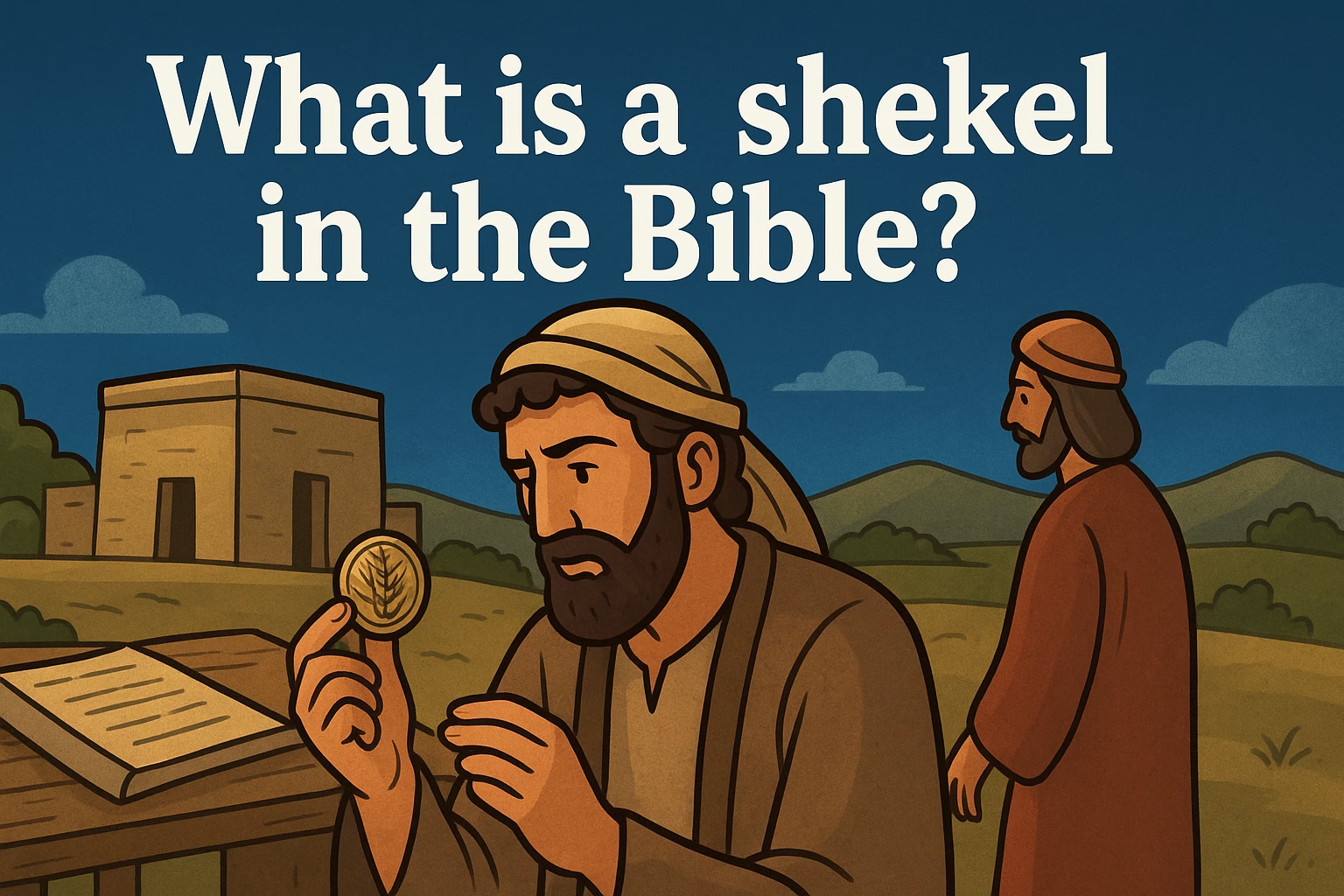
The shekel is a significant unit of currency mentioned throughout the Bible, representing both a form of money and a measure of weight. Understanding the shekel’s role in biblical texts helps provide insight into the economic and social practices of ancient Israel and its surrounding cultures. This article will delve into what a shekel is, its historical context, and its appearances in Scripture.
In biblical terms, a shekel was primarily a unit of weight and later evolved into a currency used for trade and transactions. It is essential to recognize that the value of a shekel varied over time and between regions. The shekel was commonly used in the ancient Near East, and its significance can be seen in multiple passages throughout the Bible.
Definition and Historical Context of the Shekel
The term “shekel” originates from the Hebrew word “sheqel,” which means “to weigh.” Initially, it referred to a specific weight of silver, around 11.4 grams (0.4 ounces). This weight standard was crucial in commerce, as it allowed for fair trade practices. Over time, the shekel transitioned from a weight measurement to a coinage system, with various empires, including the Babylonians and the Persians, minting their own versions of shekels.
In ancient Israel, the shekel was often associated with the Temple and religious offerings. The shekel of the sanctuary, as mentioned in Exodus 30:13, was a specific weight used for temple contributions, emphasizing its importance in worship and community support.
Shekels in the Old Testament
The shekel appears in several Old Testament passages, illustrating its use in various transactions and religious practices. For example, in Genesis 23:15, Abraham negotiates the purchase of a burial site for Sarah, offering “four hundred shekels of silver.” This transaction highlights the shekel’s role as a standard currency in significant agreements.
Another notable mention occurs in Exodus 30:13, where God instructs Moses to collect a half-shekel from each Israelite as a temple tax. This contribution was used to support the maintenance of the Tabernacle, showing how the shekel served both economic and spiritual purposes.
Shekels and Religious Offerings
The shekel’s connection to religious offerings is further emphasized in Leviticus 27:25, which states that “every value shall be according to the shekel of the sanctuary.” This highlights the shekel’s significance in determining the worth of offerings made to God. The shekel was not merely a financial tool but also a means of expressing devotion and commitment to the Lord.
Shekels in the New Testament
In the New Testament, the shekel continues to play a role in the economic landscape of the time. One of the most notable references is found in Matthew 17:24-27, where Jesus instructs Peter to catch a fish that will contain a coin sufficient to pay the temple tax, which was equivalent to a shekel. This story illustrates the ongoing relevance of the shekel in the context of Jewish customs and obligations.
The shekel also appears in the context of Jesus’ parable of the talents in Matthew 25:14-30. While the term “talent” refers to a different measure of weight, understanding the shekel’s value can provide context for the amounts involved in these stories. The shekel’s historical significance aids in grasping the broader themes of stewardship and accountability present in Jesus’ teachings.
Different Types of Shekels
Throughout biblical history, several different types of shekels were in circulation. The most commonly referenced are the shekel of the sanctuary and the Tyrian shekel. The Tyrian shekel, minted in the city of Tyre, was widely accepted throughout the Mediterranean region and became a standard currency due to its high silver content. This shekel is notable for its use in the New Testament, particularly in the context of the temple tax and other transactions.
Understanding these distinctions is crucial for interpreting various passages where shekels are mentioned. Each type carried different implications for trade, worship, and social interactions within the ancient community.
The Symbolism of the Shekel
Beyond its practical use, the shekel holds symbolic significance in the Bible. It represents value, both materially and spiritually. The act of giving shekels as offerings or paying taxes reflects a person’s commitment to their faith and community. In this sense, the shekel transcends mere currency; it embodies a deeper relationship between individuals and God.
Furthermore, the shekel can symbolize the weight of one’s responsibility. In the parable of the talents, the varying amounts entrusted to each servant can be seen as a metaphor for the gifts and resources God provides to each person. Just as the shekel was a measure of value, so too are our lives measured by how we utilize our God-given abilities and resources.
In summary, the shekel in the Bible is a multifaceted concept that encompasses its role as a currency, a measure of weight, and a symbol of spiritual commitment. Through its various appearances in Scripture, the shekel provides valuable insights into the economic, social, and religious practices of ancient Israel and the early Christian community.
The Shekel and Its Economic Implications
The shekel’s role in the economy of ancient Israel cannot be overstated. It served not only as a medium of exchange but also as a measure of value that facilitated trade and commerce. The shekel’s use extended beyond mere transactions; it was integral to the functioning of society, influencing how goods and services were valued and exchanged.
In the ancient Near East, the shekel represented a common standard that could be compared across different regions and cultures. This standardization allowed merchants and traders to negotiate prices and conduct business with a level of trust and understanding. Furthermore, the shekel’s value fluctuated with economic conditions, impacting trade dynamics and influencing the lives of individuals and families.
Shekels in Ancient Trade
Many biblical accounts reflect the economic practices of the time, with the shekel often featured in trade activities. For instance, in 1 Kings 10:14, we read about the wealth of King Solomon, who received 666 talents of gold each year, illustrating the vast amounts of wealth circulating in the region. While the talent is a larger unit of measure, understanding its correlation to the shekel helps highlight the scale of commerce during this time.
Moreover, the shekel was used in various forms of trade, including barter systems where goods were exchanged for shekels. This flexibility allowed for a dynamic economy where agricultural produce, livestock, and crafted goods could be traded effectively. The shekel thus became a foundational element of economic life, shaping social interactions and community relationships.
Shekels and Social Justice
The biblical use of shekels also intersects with themes of social justice. In Deuteronomy 16:19-20, the Israelites are instructed to pursue justice and not pervert it, emphasizing the importance of fair dealings. The shekel, as a standard unit of value, played a crucial role in ensuring that transactions were equitable and just.
Moreover, the concept of the shekel as a temple tax highlights the community’s collective responsibility to support their place of worship and the priests. This system was not just about raising funds; it was a means of fostering a sense of unity and shared purpose among the people. By contributing a shekel, each individual participated in the greater good, reinforcing community bonds and shared faith.
The Shekel in the Context of Charity
In the New Testament, the shekel also appears in discussions about charity and generosity. In Mark 12:41-44, Jesus observes people giving money at the temple, highlighting the widow who contributed two small coins, which is described as more valuable than the larger amounts given by the wealthy because of her sacrificial giving. This reflects a broader biblical principle where the value of a gift is not determined solely by its monetary worth but by the heart and intent behind it.
The shekel, therefore, serves as a reminder that financial contributions to the community and to God are acts of faith and devotion. It challenges believers to consider how they use their resources and what it means to give sacrificially, regardless of the amount.
Modern Perspectives on the Shekel
In contemporary discussions, the shekel continues to be a topic of interest, especially among scholars and theologians examining its implications in biblical texts. The modern Israeli shekel, which is the currency of Israel today, derives its name from the ancient shekel, linking present-day financial practices to biblical history.
This connection raises questions about how the values associated with the shekel—fairness, equity, and community support—can be applied today. Christians are encouraged to reflect on their financial practices, considering how they can use their resources to support their communities and advance their faith, just as their ancestors did through the shekel.
Questions for Reflection
- How does the concept of the shekel influence your understanding of financial stewardship in your own life?
- In what ways can you apply the biblical principles of justice and equity in your financial dealings?
- What does the symbolism of the shekel teach about commitment to God and community in contemporary settings?
Conclusion: The Enduring Legacy of the Shekel
The shekel in the Bible represents more than just a unit of currency; it encapsulates the economic, social, and spiritual dimensions of life in ancient Israel. Its significance is woven throughout Scripture, illustrating the importance of fair trade, community responsibility, and the value of generosity. Understanding the shekel’s multifaceted role helps believers appreciate the historical context of their faith and encourages them to apply these lessons in their lives today.
By reflecting on the use of shekels in the Bible, Christians can gain insights into their own financial practices and the importance of contributing to their faith communities. As the shekel has endured through history, so too should the principles of justice, generosity, and commitment that it embodies.
For further exploration of biblical themes related to finance and community, you can read about stewardship in the Bible and learn how ancient practices continue to influence modern faith communities through tithing and offerings.