
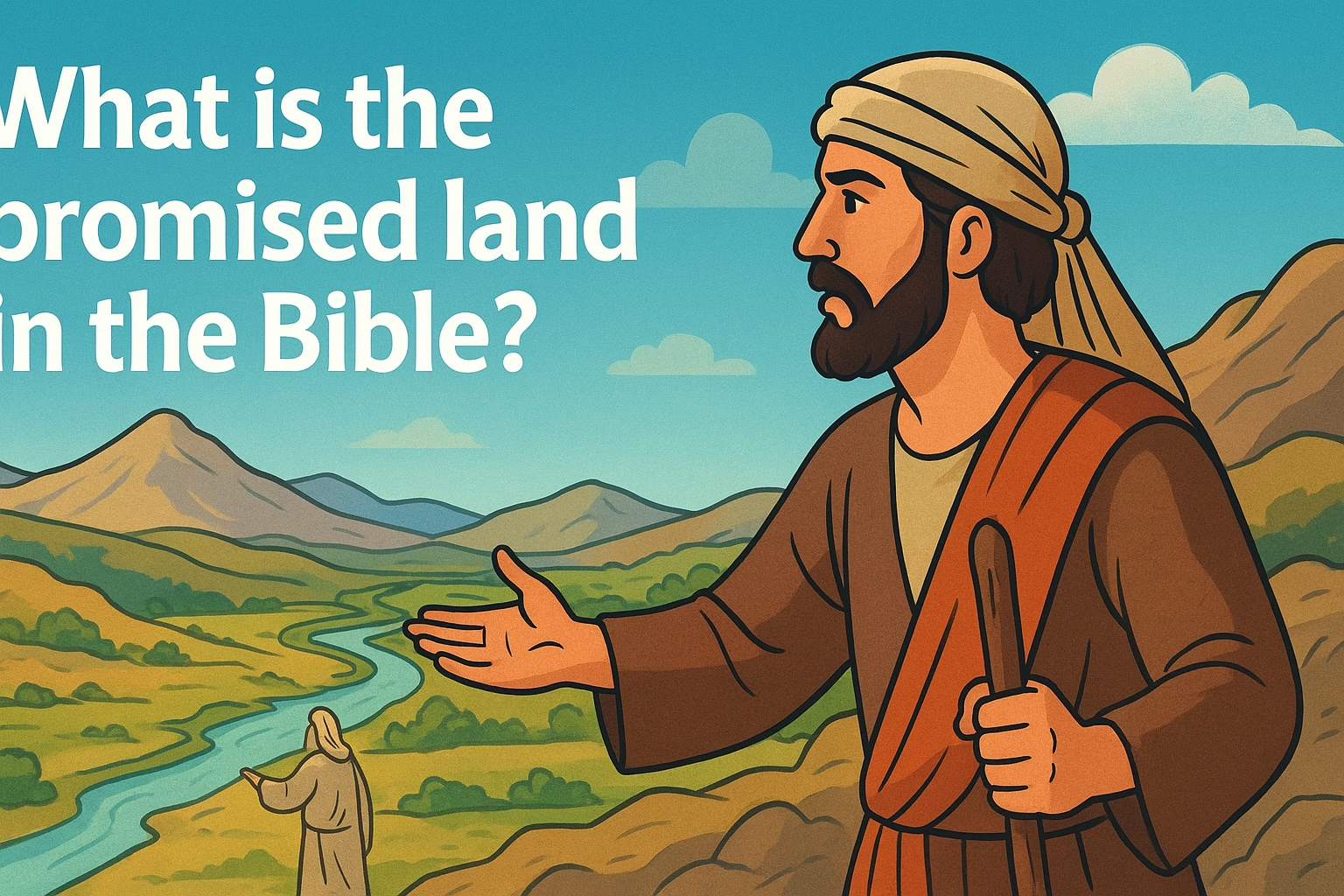
The concept of the Promised Land is one of the most significant themes in the Bible, representing hope, fulfillment, and divine promise. It is a land that God promised to the descendants of Abraham, Isaac, and Jacob, serving as a central point in the narrative of the Israelites’ journey from slavery to freedom. In this article, we will explore the characteristics of the Promised Land, its biblical significance, and the key passages that illuminate its meaning.
The Promised Land is described in the Bible as a fertile and prosperous land flowing with milk and honey. It is often associated with the land of Canaan, which encompasses modern-day Israel and surrounding territories. The promise of this land signifies not only a physical territory but also a spiritual inheritance, representing God’s covenant with His people.
The Biblical Foundation of the Promised Land
The roots of the Promised Land can be traced back to God’s covenant with Abraham in Genesis 12:1-3. God called Abraham to leave his homeland and journey to a land that He would show him. In this passage, God promises Abraham that He will make him into a great nation and bless him, stating that the land will be given to his descendants. This promise is reiterated in Genesis 15:18-21, where God outlines the boundaries of the land that will belong to Abraham’s descendants.
As the narrative unfolds, the promise is passed down through Abraham’s son Isaac and grandson Jacob. In Genesis 28:13-15, God reaffirms His commitment to Jacob, declaring that the land on which he lies will belong to him and his offspring. This establishes the Promised Land as a central element of God’s plan for His chosen people.
The Journey to the Promised Land
The journey to the Promised Land is a significant part of the Israelite narrative, particularly in the Book of Exodus. After generations of slavery in Egypt, Moses is chosen by God to lead the Israelites to freedom. In Exodus 3:8, God tells Moses that He has come down to deliver His people from oppression and to bring them to a “good and spacious land, a land flowing with milk and honey.” This highlights the land’s abundance and the blessings that await the Israelites.
However, the journey is not straightforward. The Israelites wander in the wilderness for forty years due to their disobedience and lack of faith. This period serves as a time of testing and preparation, as God teaches them to rely on Him. The story emphasizes that the Promised Land is not just a physical destination but also a place of spiritual growth and covenant relationship with God.
The Promised Land is characterized by several key features, which are highlighted throughout the biblical narrative:
- Fertility and Abundance: The land is often described as flowing with milk and honey (Exodus 3:8), symbolizing its richness and potential for sustenance.
- Divine Gift: The land is portrayed as a gift from God, emphasizing His sovereignty and faithfulness to His promises (Deuteronomy 1:8).
- A Land of Rest: The Promised Land is seen as a place of rest for the weary Israelites, contrasting their previous life of slavery in Egypt (Deuteronomy 12:9-10).
- Spiritual Significance: The land holds spiritual importance, as it is where the Israelites are to worship God and live according to His laws (Exodus 20:24).
Entering the Promised Land
After the years of wandering, the Israelites finally approach the Promised Land under the leadership of Joshua, Moses’ successor. In the Book of Joshua, the Israelites cross the Jordan River into the land God had promised them. This event is marked by miraculous occurrences, such as the river parting (Joshua 3:14-17), which reinforces God’s presence and power.
The conquest of the Promised Land is detailed in the Book of Joshua, where the Israelites face various challenges and battles. The land is divided among the tribes of Israel, fulfilling God’s promise of inheritance. This division of the land is significant as it establishes the identity and heritage of the Israelite tribes, further solidifying their connection to the covenant with God.
The Promised Land as a Spiritual Metaphor
Beyond its physical implications, the Promised Land serves as a powerful metaphor in Christian theology. It represents the ultimate fulfillment of God’s promises and the hope of eternal life. In the New Testament, the concept of the Promised Land evolves, with Jesus presenting a new covenant that invites all believers into a spiritual inheritance.
In Hebrews 11:8-10, the author reflects on the faith of Abraham and his descendants, stating that they looked forward to a city with foundations, whose architect and builder is God. This perspective shifts the focus from a physical land to a spiritual reality, emphasizing that the true Promised Land is found in the relationship with God through Christ.
The imagery of the Promised Land continues to resonate in Christian teachings, symbolizing a place of peace, rest, and communion with God. Believers are encouraged to seek this spiritual inheritance as they navigate their own journeys of faith.
The Promised Land in Prophetic Literature
The theme of the Promised Land extends beyond the historical accounts of the Israelites in the Torah and into the prophetic literature of the Bible. Prophets such as Isaiah, Jeremiah, and Ezekiel often referred to the Promised Land to remind the Israelites of God’s covenant and the consequences of their disobedience. For instance, Isaiah 11:11-12 speaks of a time when God will recover the remnant of His people from various nations and bring them back to the Promised Land, signifying hope and restoration.
During times of exile, the Promised Land became a symbol of longing and hope for the Jewish people. The prophets emphasized that despite their failures and sin, God’s promises remain steadfast. Jeremiah 29:10-14 reassures the exiles that God has plans for them, plans to prosper them and give them hope, ultimately pointing to a future restoration to their homeland.
The Promised Land and the New Covenant
In Christian theology, the Promised Land takes on additional layers of meaning through the lens of the New Covenant established by Jesus Christ. The Gospels present Jesus as the fulfillment of the promises made to Abraham and the prophets. Through His sacrificial death and resurrection, believers are invited into a new relationship with God, which transcends geographical boundaries.
In John 14:2-3, Jesus speaks of preparing a place for His followers in His Father’s house, which can be interpreted as a spiritual Promised Land. This concept emphasizes that the promise is no longer limited to a physical territory but extends to eternal life and communion with God. The apostle Paul reinforces this idea in Galatians 3:29, where he states that all who belong to Christ are heirs according to the promise, highlighting that the true inheritance of the Promised Land is available to all believers.
The Promised Land in Christian Life
The Promised Land serves as a powerful metaphor for the spiritual journey of Christians today. Just as the Israelites faced trials and tribulations on their way to the Promised Land, believers are reminded that their journey of faith may also include challenges. The wilderness experience of the Israelites symbolizes the struggles and growth that occur during a believer’s life as they seek to grow closer to God.
Moreover, the Promised Land invites believers to reflect on their own spiritual inheritance. Questions arise about what it means to live in the fullness of God’s promises today. Are we actively pursuing a relationship with God that leads us to spiritual abundance? How do we navigate our own “wilderness” experiences while keeping our eyes on the hope of our eternal Promised Land?
The Role of Faith in Entering the Promised Land
Faith plays a crucial role in the journey to the Promised Land, both in the biblical narrative and in the lives of believers today. The Israelites’ failure to trust God during their wilderness wanderings resulted in a generation not entering the Promised Land (Numbers 14:26-30). This serves as a stark reminder of the importance of faith and obedience in experiencing God’s promises.
In the New Testament, faith is emphasized as the key to accessing the promises of God. Hebrews 11 highlights the faith of the patriarchs and how their trust in God’s promises shaped their lives. This chapter encourages believers to remain steadfast in faith, knowing that God is faithful to fulfill His promises, even when circumstances may seem contrary.
Conclusion: The Promised Land as a Call to Action
The Promised Land is more than a historical or geographical concept; it is a profound invitation to experience God’s faithfulness and promises in our lives. It challenges believers to reflect on their journey, encouraging them to trust in God and seek a deeper relationship with Him. The Promised Land serves as a reminder that God is always working towards restoration and fulfillment, urging us to pursue our spiritual inheritance with faith and commitment.
As we navigate our own wilderness experiences, may we hold fast to the hope of the Promised Land, knowing that through faith in Christ, we are heirs to a glorious future filled with His presence and peace.
For further exploration of related themes, consider visiting this article on the significance of faith in biblical narratives and this resource on the New Covenant and its implications for believers.