
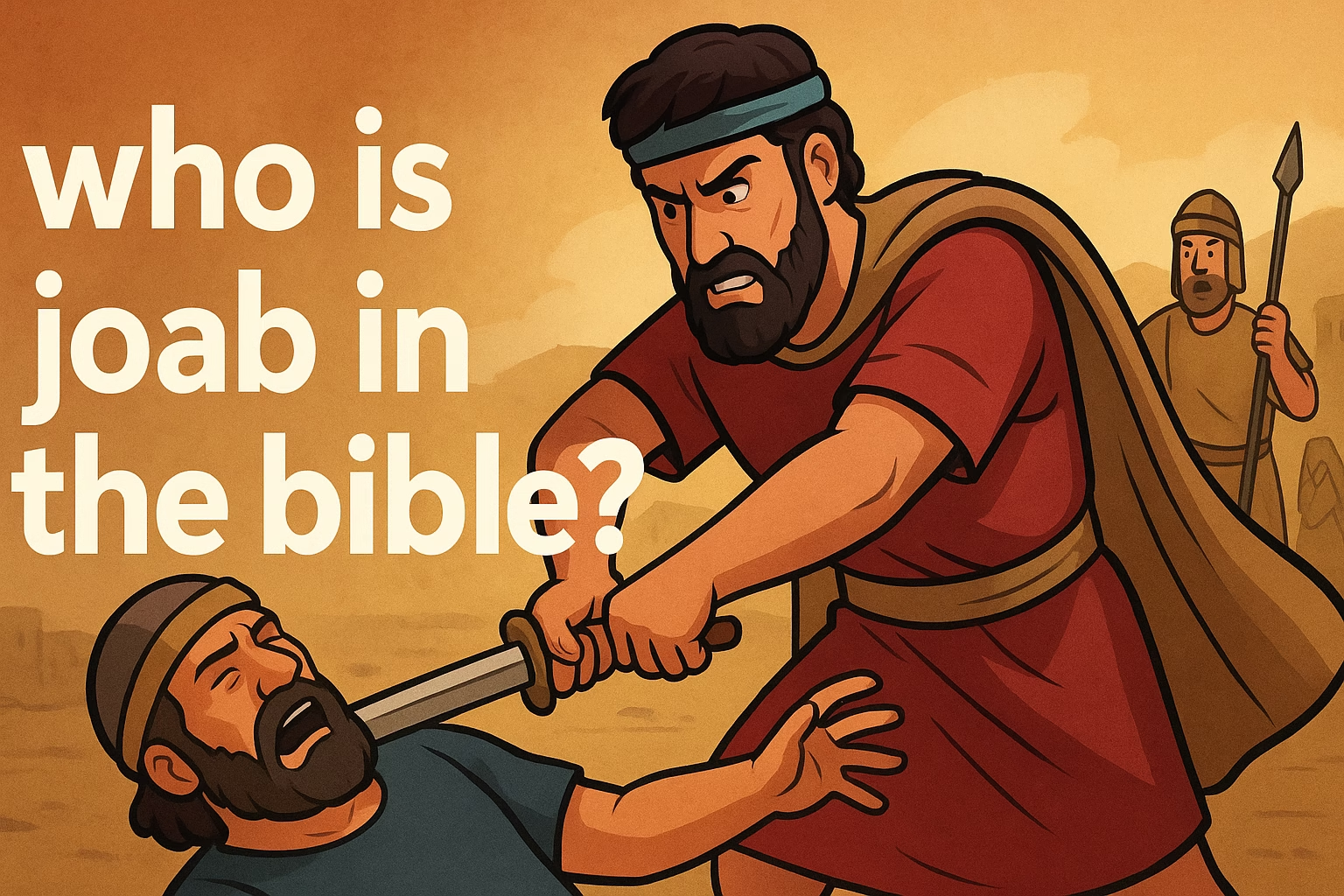
Joab is a prominent figure in the Bible, known for his military prowess and complex character. He served as the commander of King David’s army and played a significant role in many key events during David’s reign. Understanding Joab’s life and actions provides insight into the turbulent times of ancient Israel and the challenges faced by its leaders.
In the biblical narrative, Joab is first introduced in 1 Samuel 26:6, where he is described as the nephew of David, the son of Zeruiah. As a skilled warrior, Joab quickly rises through the ranks to become one of David’s most trusted generals. His story is interwoven with themes of loyalty, ambition, and moral ambiguity.
Joab’s Role in David’s Military Campaigns
Military Achievements
Joab’s military career is marked by numerous victories that solidified David’s rule over Israel. One of his earliest significant achievements was in the conquest of Jerusalem, also known as Jebus, which David made the capital of Israel (2 Samuel 5:6-10). Joab led the charge against the Jebusites and was the first to enter the city, earning him the title of chief military leader.
Another notable victory under Joab’s command was against the Ammonites. In 2 Samuel 10, David sent Joab and the entire army to confront the Ammonite forces. Joab displayed strategic brilliance in the battle, successfully defeating the enemy and expanding Israel’s territory.
Joab’s Loyalty and Ambition
While Joab was fiercely loyal to David, his ambition sometimes led him to make questionable choices. One pivotal moment came during Absalom’s rebellion, when Joab played a crucial role in quelling the uprising (2 Samuel 18). Despite his loyalty to David, Joab disobeyed David’s direct orders to spare Absalom’s life. After Joab killed Absalom, he faced the wrath of David, who mourned for his son. This incident highlights the complexity of Joab’s character—his loyalty to the king was evident, but his methods often raised ethical questions.
Joab’s Relationships and Conflicts
Joab and His Family
Joab’s relationship with his family also shaped his actions. He was one of three brothers—Abishai and Asahel were his siblings. Asahel’s death at the hands of Abner, the commander of Saul’s army, fueled Joab’s desire for vengeance (2 Samuel 2:23). Joab’s quest for revenge against Abner ultimately led to a significant political fallout, as he assassinated Abner in cold blood, despite the latter’s attempts to negotiate peace (2 Samuel 3:27). This act not only demonstrated Joab’s ruthless nature but also complicated David’s efforts to unify the kingdom.
Conflicts with David
Joab’s relationship with David was often strained due to his actions. For instance, after the murder of Uriah the Hittite, David’s loyal soldier, Joab was complicit in a plan that resulted in Uriah’s death (2 Samuel 11:14-15). David had sent Uriah to the front lines knowing he would be killed, and Joab carried out the order without question. This incident illustrates Joab’s willingness to follow orders, even when they involved deceit and betrayal.
Later, Joab’s defiance of David’s orders regarding Absalom further strained their relationship. David’s deep love for Absalom conflicted with Joab’s pragmatic approach to leadership. Joab’s actions eventually led to a rift between him and David, as the king struggled to balance his personal feelings with his responsibilities as a leader.
Joab’s Downfall
Final Conflicts and Death
Joab’s life came to a tragic end due to the very traits that defined him. After David’s death, Adonijah, one of David’s sons, sought Joab’s support in claiming the throne. However, Solomon, David’s chosen successor, ordered Joab’s execution for his past treachery and disloyalty (1 Kings 2:28-34). Joab sought refuge in the tabernacle, but he was ultimately dragged out and killed, marking a dramatic conclusion to his life.
Joab’s demise underscores the consequences of his ambition, loyalty, and the violent path he chose throughout his life. His story serves as a reminder of the complexities of human relationships and the moral dilemmas faced by leaders in positions of power.
Joab’s Character Traits and Leadership Style
Joab’s character is multifaceted, displaying qualities of both a competent leader and a morally ambiguous figure. He was known for his strategic mind and battlefield skills, which won him respect among his peers and loyalty from his soldiers. However, his leadership style often leaned towards ruthlessness, as seen in his willingness to resort to violence to achieve his objectives.
His fierce loyalty to David was often juxtaposed with his self-serving ambition. Joab understood the political landscape of Israel and maneuvered through it with a combination of cunning and aggression. This duality made him a complex leader; he could inspire loyalty in his troops while simultaneously inciting fear through his violent actions.
Joab’s Influence on David’s Reign
Joab’s influence on David’s reign extended beyond military victories. He was a key player in the political maneuverings of the time. His actions often had lasting repercussions for the kingdom. For example, his assassination of Abner not only eliminated a rival but also set a precedent for using violence as a political tool, which would resonate throughout Israel’s history.
Moreover, Joab’s role in Absalom’s rebellion illustrated how personal relationships could intertwine with political ambitions. His decision to kill Absalom, despite David’s wishes, was not just a military tactic but also a reflection of his understanding of power dynamics. Joab recognized that loyalty to the king conflicted with the need to eliminate threats to his authority, revealing the complicated balance leaders must maintain.
Joab’s Moral Ambiguity
The moral ambiguity surrounding Joab’s actions raises significant questions about the nature of leadership and loyalty. His willingness to kill for what he deemed the greater good challenges readers to consider the ethical implications of such decisions. Was Joab justified in his actions, or did his ambition cloud his judgment? This complexity invites deeper reflection on the nature of authority and the moral responsibilities of those in power.
Lessons from Joab’s Life
Joab’s life serves as a cautionary tale about the perils of unchecked ambition and the consequences of moral compromise. His story encourages readers to reflect on their own values and the impact of their choices. As Joab navigated through loyalty, betrayal, and violence, he ultimately faced the tragic outcome of his decisions.
One of the key lessons is the importance of aligning one’s actions with ethical principles. Joab’s decisions often led to conflict and estrangement, particularly with David, underscoring how personal ambitions can lead to estrangement from those we serve. His story prompts questions about how individuals can maintain integrity in leadership roles while also fulfilling their responsibilities.
Joab’s Legacy in the Biblical Narrative
Joab’s legacy is significant within the biblical narrative, representing the complexities of human nature and leadership. His actions had lasting effects on the kingdom of Israel, influencing subsequent generations and leaders. The moral dilemmas he faced echo throughout Scripture, reminding readers of the challenges leaders encounter.
Moreover, Joab’s story contributes to the broader themes of the Bible, such as the interplay between divine sovereignty and human agency. While Joab acted according to his understanding of loyalty and ambition, the narrative ultimately reflects God’s overarching plan for Israel, indicating that human actions, even flawed ones, can fit into a larger divine purpose.
Questions for Reflection
As we consider Joab’s life and actions, several questions arise that can guide our understanding and application of his story:
- What does Joab’s willingness to disobey David teach us about the nature of loyalty?
- How can we reconcile ambition with ethical leadership in our own lives?
- What lessons can be drawn from Joab’s relationships and conflicts with David and others?
- In what ways does Joab’s story reflect the complexities of power and authority?
- How can we apply the lessons from Joab’s life to contemporary leadership challenges?
These questions encourage deeper engagement with the biblical text and the character of Joab, allowing readers to explore the nuances of his life and the implications for their own experiences.
Conclusion
Joab’s life is a vivid portrayal of the complexities of loyalty, ambition, and moral ambiguity in leadership. His military achievements and personal conflicts reveal the challenges faced by leaders, making his story relevant for contemporary readers. By examining Joab’s character and actions, we gain valuable insights into the nature of authority and the ethical dilemmas that accompany it. Ultimately, Joab’s legacy serves as both a warning and a guide for those navigating the intricate landscape of leadership.
For further exploration of biblical figures and their significance, consider reading about the complexities of leadership in the Bible and the moral challenges faced by David in his reign. You can find more information in these articles: the complexities of leadership in the Bible and the moral challenges faced by David.