
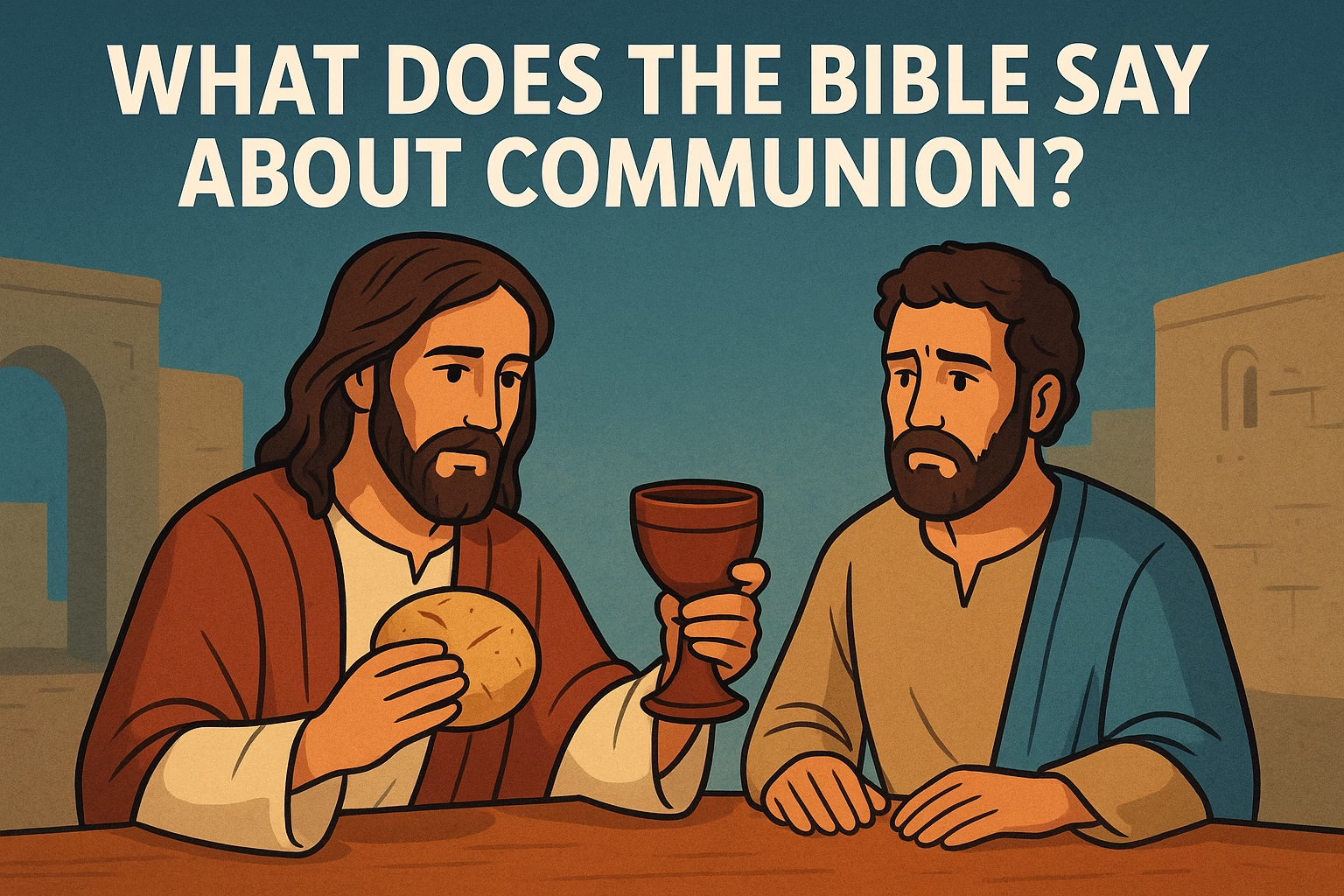
Communion, also known as the Lord’s Supper or Eucharist, is a significant practice in Christianity that commemorates the Last Supper of Jesus with His disciples. This sacred ritual holds deep theological meaning and varies in interpretation among different Christian denominations. Understanding what the Bible says about communion can enrich one’s faith and provide insights into its importance within the Christian community.
The Bible addresses communion in several passages, primarily in the New Testament. The most notable accounts are found in the Gospels, particularly in the context of Jesus’ final meal before His crucifixion. These scriptures provide the foundation for the practice of communion in Christian worship.
Biblical Accounts of the Last Supper
The Last Supper is documented in the Gospels of Matthew, Mark, and Luke, with each account providing a slightly different perspective but conveying the same essential message. In Matthew 26:26-28, we read:
“While they were eating, Jesus took some bread, and after blessing it, He broke it and gave it to the disciples, and said, ‘Take, eat; this is My body.’ And when He had taken a cup and given thanks, He gave it to them, saying, ‘Drink from it, all of you; for this is My blood of the covenant, which is poured out for many for forgiveness of sins.'” (Matthew 26:26-28, NLT)
This passage illustrates the establishment of communion as a memorial of Jesus’ sacrifice. The bread represents His body, while the cup symbolizes His blood, highlighting the sacrificial nature of His death. This moment is both a celebration and a solemn reminder of the new covenant between God and humanity.
The Meaning of Communion
Communion serves multiple purposes in the Christian faith. First and foremost, it is an act of remembrance. In Luke 22:19, Jesus instructs His disciples, “Do this in remembrance of Me.” This command emphasizes the importance of recalling Jesus’ sacrifice and the love that motivated it. By participating in communion, believers honor and remember the significance of Christ’s death and resurrection.
Moreover, communion is seen as a means of spiritual nourishment. In John 6:53-58, Jesus speaks about the necessity of consuming His flesh and blood to have eternal life. While this passage is often interpreted metaphorically, it underscores the belief that partaking in communion strengthens one’s relationship with Christ and deepens faith.
Theological Significance of Communion
The theological implications of communion are profound. The act is a proclamation of faith. In 1 Corinthians 11:26, Paul writes, “For as often as you eat this bread and drink the cup, you proclaim the Lord’s death until He comes.” This verse highlights that communion is not only a remembrance but also a declaration of the believer’s faith in Jesus’ redemptive work. It is a way to actively testify to the hope of His return.
Additionally, communion fosters a sense of community among believers. In 1 Corinthians 10:16-17, Paul emphasizes the unity that comes from sharing in the body and blood of Christ:
“Is not the cup of blessing which we bless a sharing in the blood of Christ? Is not the bread which we break a sharing in the body of Christ? Since there is one bread, we who are many are one body; for we all partake of the one bread.” (1 Corinthians 10:16-17, NLT)
This passage illustrates that communion is not just an individual act; it binds the church together as one body in Christ. The shared experience of communion strengthens the bonds of fellowship among believers and reinforces the idea that they are all part of a larger spiritual family.
Communion in the Early Church
The practice of communion was central to the early church. Acts 2:42 describes how the early Christians “devoted themselves to the apostles’ teaching and to fellowship, to the breaking of bread and to prayer.” This indicates that communion was an integral part of their worship and community life. It was not merely a ritual but a vital expression of their faith and commitment to one another.
As the early church grew, so did the understanding and practice of communion. The Apostle Paul addressed issues related to communion in the Corinthian church, where divisions and misunderstandings had arisen. In 1 Corinthians 11:20-22, he confronts the manner in which the Corinthians were observing the Lord’s Supper, emphasizing the need for reverence and unity during the celebration:
“Therefore when you meet together, it is not to eat the Lord’s Supper, for in your eating each one takes his own supper first; and one is hungry and another is drunk. What! Do you not have houses in which to eat and drink? Or do you despise the church of God and shame those who have nothing?” (1 Corinthians 11:20-22, NLT)
This admonishment highlights that communion should be approached with humility and love, reflecting the values of the Kingdom of God. It serves as a reminder that the act of communion is not just about the individual but about the community as a whole.
Different Interpretations of Communion
Throughout Christian history, various interpretations of communion have emerged, leading to differing practices among denominations. Some view communion as a symbolic act, while others consider it a sacrament with real spiritual significance. For instance, the Catholic Church teaches in the doctrine of transubstantiation that the bread and wine become the actual body and blood of Christ during the Mass. In contrast, many Protestant denominations see communion primarily as a symbolic act of remembrance.
These differences in understanding reflect broader theological beliefs and traditions within Christianity. However, regardless of the specific interpretation, the core purpose of communion remains the same: to remember Christ’s sacrifice, to proclaim His death, and to foster unity among believers.
The Practice of Communion Today
Today, the practice of communion varies widely among Christian denominations, influenced by theological beliefs, cultural contexts, and church traditions. Most congregations celebrate communion regularly, whether weekly, monthly, or on special occasions. The frequency and manner of observance often reflect the church’s theology regarding the significance of the sacrament.
In many churches, communion is celebrated during a worship service, often accompanied by prayers, hymns, and reflections on the meaning of the elements. Some congregations practice an open table, inviting all believers to partake, while others may have restrictions based on membership or doctrinal agreement. This practice can lead to meaningful discussions about the inclusiveness of communion and what it means to be part of the body of Christ.
Preparation for Communion
Preparation for communion is an important aspect of the practice. In 1 Corinthians 11:27-29, Paul warns against partaking in communion unworthily, stressing the need for self-examination and repentance:
“Whoever eats the bread or drinks the cup of the Lord in an unworthy manner will be guilty of sinning against the body and blood of the Lord. Everyone ought to examine themselves before they eat of the bread and drink from the cup.” (1 Corinthians 11:27-28, NLT)
This call for self-reflection encourages believers to approach communion with a heart aligned with God. Many churches incorporate a time of confession or silence before communion, allowing individuals to prepare spiritually. This reflective practice emphasizes the seriousness and sacredness of the act of communion.
The Role of Communion in Spiritual Growth
Communion is also seen as a means of grace that can facilitate spiritual growth. Many believers experience a deepening of their faith through regular participation in this sacrament. It serves as a reminder of God’s love and grace, reinforcing the idea that believers are nourished spiritually through the act of sharing in Christ’s body and blood. This connection can foster a greater awareness of one’s spiritual needs and a deeper reliance on Christ for sustenance.
Moreover, communion can inspire a sense of mission. As believers partake in the bread and cup, they are reminded of their call to share the love of Christ with others. The communal aspect of communion encourages believers to extend the grace they receive to those around them, fostering a spirit of service and outreach within the church and beyond.
Communion and the Eschatological Hope
Another important aspect of communion is its eschatological significance. In the act of communion, believers not only remember Christ’s past sacrifice but also anticipate His future return. This forward-looking perspective is highlighted in the words of Jesus during the Last Supper, where He states that He will not drink of the fruit of the vine again until He drinks it anew in the Kingdom of God (Luke 22:18). This promise serves as a reminder that communion is not just a memorial but a participation in the hope of eternal life and the coming of God’s Kingdom.
This eschatological dimension can instill a sense of purpose and urgency in the life of a believer. As they partake in communion, they are reminded of their role in God’s redemptive plan and the importance of living out their faith in anticipation of Christ’s return. This hope can be a source of comfort and motivation, encouraging believers to live in a manner that reflects the values of the Kingdom of God.
Communion as a Call to Unity
Communion also serves as a powerful call to unity among believers. In a world often marked by division and strife, the act of sharing in the body and blood of Christ transcends cultural, racial, and denominational barriers. Paul’s emphasis on the unity of the body of Christ in 1 Corinthians 10:17 serves as a reminder that communion is an opportunity to celebrate the diversity within the church while recognizing a shared faith in Jesus.
As believers gather around the communion table, they are reminded of their common identity in Christ. This unity is not merely a theological concept but a lived reality that should permeate all aspects of the church’s life. The act of communion challenges believers to pursue reconciliation and harmony within the body of Christ, reflecting the love and grace they have received from God.
Conclusion: The Transformative Power of Communion
In conclusion, communion is a profound and multifaceted practice that encompasses remembrance, nourishment, proclamation, and unity. It invites believers to reflect on Christ’s sacrifice, to deepen their relationship with Him, and to strengthen their ties with one another. As a central act of Christian worship, communion not only honors the past but also shapes the present and future of the church. Through this sacred practice, believers are reminded of their identity in Christ and are called to live out their faith in love and service to others.
Ultimately, communion is more than a ritual; it is a transformative experience that draws believers closer to God and to each other. As the church continues to navigate the complexities of faith and community, the practice of communion remains a vital expression of the love and grace that defines the Christian journey.
Understanding the significance of the Eucharist can further deepen one’s appreciation for communion, while exploring the diversity of Christian practices can shed light on how different traditions approach this sacred act.