
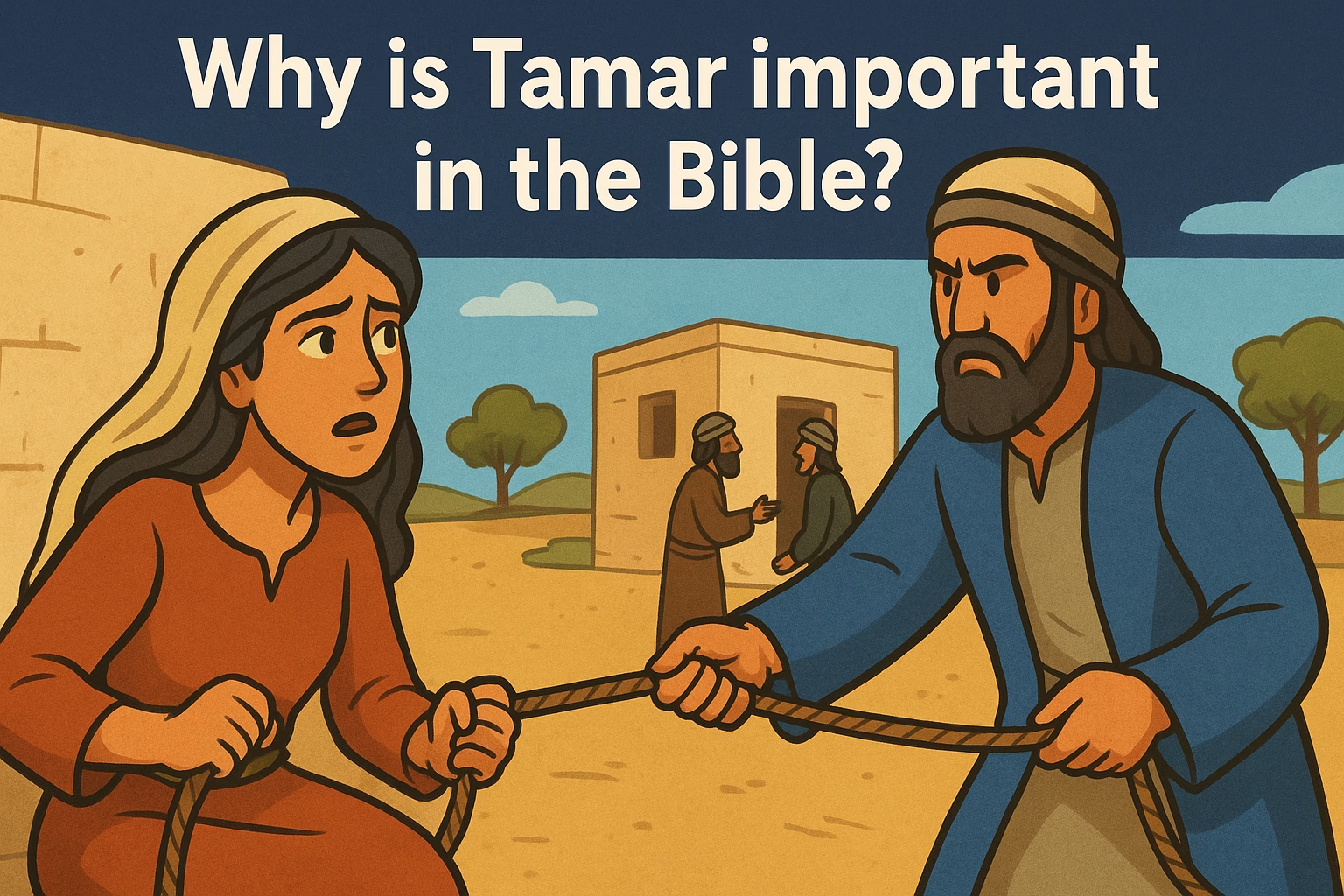
The story of Tamar is one of the more complex and often overlooked narratives in the Bible. Her life and actions provide significant insights into themes of justice, redemption, and the role of women in biblical history. By examining her story, we can better understand her importance and the lessons that arise from her experience.
Tamar is important in the Bible for several reasons, including her role in the lineage of Jesus, her assertion of rights in a patriarchal society, and the moral implications of her actions. Her story is primarily found in Genesis 38, which provides a narrative that is rich with cultural and theological significance.
Tamar’s Background and Context
Tamar was the daughter-in-law of Judah, one of the twelve sons of Jacob. Her story is set against the backdrop of the ancient Near Eastern culture, where lineage and inheritance were of utmost importance. After her husband Er died, Tamar was left childless, which was a precarious position for a woman in that society. According to the levirate marriage custom, it was the duty of the deceased husband’s brother to marry the widow and produce offspring to carry on the family line.
Judah’s second son, Onan, was instructed to fulfill this duty, but he refused to provide an heir for Tamar, leading to his own demise as a consequence of his actions. After these events, Judah promised Tamar that she would marry his youngest son, Shelah, but he never followed through. Tamar found herself in a situation where her rights and dignity were disregarded.
The Bold Actions of Tamar
Feeling betrayed and desperate for justice, Tamar took matters into her own hands. Disguising herself as a prostitute, she encountered Judah on the road. This encounter was not just a desperate act; it was a calculated move to secure her rights and ensure her place in Judah’s family. When Judah did not recognize her, he offered her a goat as payment and left his seal and staff as a pledge.
Tamar’s actions can be seen as both controversial and courageous. She was asserting her rights in a society that marginalized women. By doing so, she ensured that she would have a child, which was vital for her survival and identity. When Judah later discovered that Tamar was pregnant, he initially condemned her to death, not realizing that he was the father. However, Tamar’s cleverness in presenting the seal and staff proved her case, leading Judah to acknowledge his wrongdoing.
Theological Significance of Tamar’s Story
Tamar’s story carries significant theological weight. It illustrates themes of justice, righteousness, and God’s providence. Despite the morally ambiguous circumstances surrounding her actions, God used Tamar to fulfill His plan. She eventually gave birth to twin sons, Perez and Zerah, and her inclusion in the lineage of Jesus is a profound testament to God’s grace and redemption.
Matthew 1:3 lists Tamar in the genealogy of Jesus, highlighting her significance in God’s redemptive plan. This inclusion serves as a reminder that God can work through anyone, regardless of their circumstances or societal status. Tamar’s story challenges the conventional views of righteousness, showing that God values faithfulness and justice over societal norms.
Lessons from Tamar’s Life
Tamar’s life offers several lessons that resonate with contemporary readers. Firstly, her story emphasizes the importance of justice and the need to stand up for oneself when faced with injustice. Tamar’s determination to secure her rights in a patriarchal society is a powerful example of resilience.
- Advocacy for Justice: Tamar’s actions teach us the importance of advocating for justice, even when the odds are against us.
- God’s Redemptive Plan: Her inclusion in the genealogy of Jesus underscores the idea that God can use unexpected people and situations to fulfill His purposes.
- Complexity of Morality: Tamar’s story invites us to consider the complexities of morality. Her actions, though unconventional, were driven by a desire for justice and survival.
Implications for Women in the Bible
Tamar’s narrative also sheds light on the role of women in biblical history. In a time when women’s voices were often silenced, Tamar’s story stands out as a testament to female agency. She actively sought to change her situation rather than passively accept her fate. This aspect of her story highlights the importance of women’s contributions and experiences in the biblical narrative.
Moreover, Tamar’s story is a reminder that women in the Bible often faced challenges that were not only personal but also systemic. Her determination to seek justice reflects the struggles many women continue to face today. By examining her story, we gain insight into the broader theme of women’s resilience and strength in the biblical context.
Conclusion of Tamar’s Significance
In summary, Tamar is a pivotal figure in the Bible whose story encompasses themes of justice, redemption, and the complexity of morality. Her actions were not merely personal; they had far-reaching implications for her family lineage and God’s redemptive plan. By understanding Tamar’s importance, we can appreciate the depth of her character and the lessons her life offers to both men and women today.
The Role of Tamar in the Lineage of Jesus
One of the most significant aspects of Tamar’s story is her role in the genealogy of Jesus. The inclusion of Tamar in Matthew 1:3 is not just a historical note; it speaks volumes about God’s plan for redemption. Tamar’s lineage connects her to the larger narrative of salvation history, showcasing how God can bring forth His purposes through unexpected individuals.
This inclusion also highlights the importance of women in the biblical genealogy. Tamar, along with other women mentioned in the lineage, such as Rahab and Ruth, illustrates that God’s grace extends beyond traditional boundaries. These women faced societal challenges yet played crucial roles in the unfolding of God’s plan. Tamar’s presence in this lineage emphasizes that God’s redemptive work often involves those who are marginalized or overlooked.
The Cultural Context of Tamar’s Actions
To fully appreciate Tamar’s actions, it is essential to understand the cultural context of her time. In ancient Israel, women were often viewed primarily in relation to their male counterparts. Their social standing and worth were closely tied to their ability to bear children. Tamar’s desperation to secure her place within Judah’s family was not merely a personal desire; it was a matter of survival in a society that offered little support to women without male guardians.
The levirate marriage practice was designed to protect widows like Tamar, but her experience highlights the failure of this system when Judah did not fulfill his obligations. Tamar’s resort to disguise and deception can be seen as a response to the systemic injustices she faced. Her story reminds us that sometimes individuals must take bold actions to reclaim their rights when established systems fail them.
Comparative Analysis with Other Biblical Women
Tamar’s story can also be compared to the stories of other women in the Bible who faced similar challenges. For example, Bathsheba, the wife of Uriah, also navigated a complex situation involving power dynamics and morality. Like Tamar, Bathsheba’s story involves themes of agency, manipulation, and the quest for justice in a patriarchal society.
Another comparison can be made with Ruth, who, despite being a foreigner, took significant risks to secure her future and that of her mother-in-law, Naomi. Both Tamar and Ruth exemplify resilience and determination, showing that women in biblical narratives often acted decisively to change their circumstances. These connections deepen our understanding of the role of women in the Bible and highlight their contributions to God’s overarching narrative.
Modern Implications of Tamar’s Story
Tamar’s story resonates with contemporary audiences, particularly in discussions about gender equality and justice. Her actions challenge modern readers to reflect on issues of power, agency, and the importance of standing up against injustice. In many ways, Tamar’s fight for her rights mirrors the struggles that women face today in various contexts.
As discussions about women’s rights and representation continue to evolve, Tamar serves as a powerful symbol of resilience. Her story encourages individuals to advocate for justice and hold systems accountable when they fail to protect the vulnerable. By examining Tamar’s narrative, we can draw lessons about the importance of courage and determination in the face of adversity.
Reflection on Tamar’s Legacy
Tamar’s legacy is one of courage, complexity, and divine purpose. She is a reminder that the stories of women in the Bible are not merely footnotes but central to understanding the unfolding of God’s plan. Her actions, while controversial, were rooted in a deep desire for justice and recognition.
As we reflect on Tamar’s life, we can ask ourselves how her story impacts our understanding of justice today. Are we willing to speak up for those who are marginalized? How can we advocate for change in our communities? Tamar’s narrative invites us to engage with these questions, encouraging us to be agents of justice in our own lives.
Final Thoughts on Tamar’s Importance
Tamar’s importance in the Bible extends far beyond her immediate circumstances. Her story illustrates the complexities of morality, the struggle for justice, and the significant role of women in God’s redemptive narrative. By exploring her life, we gain valuable insights into the broader themes of faith, resilience, and the transformative power of God’s grace. As we consider her legacy, may we be inspired to stand up for justice and advocate for those who cannot speak for themselves, just as Tamar did.
For further exploration of women’s roles in the Bible, consider reading about the significance of women in biblical genealogy and the narratives of other influential women in scripture.