
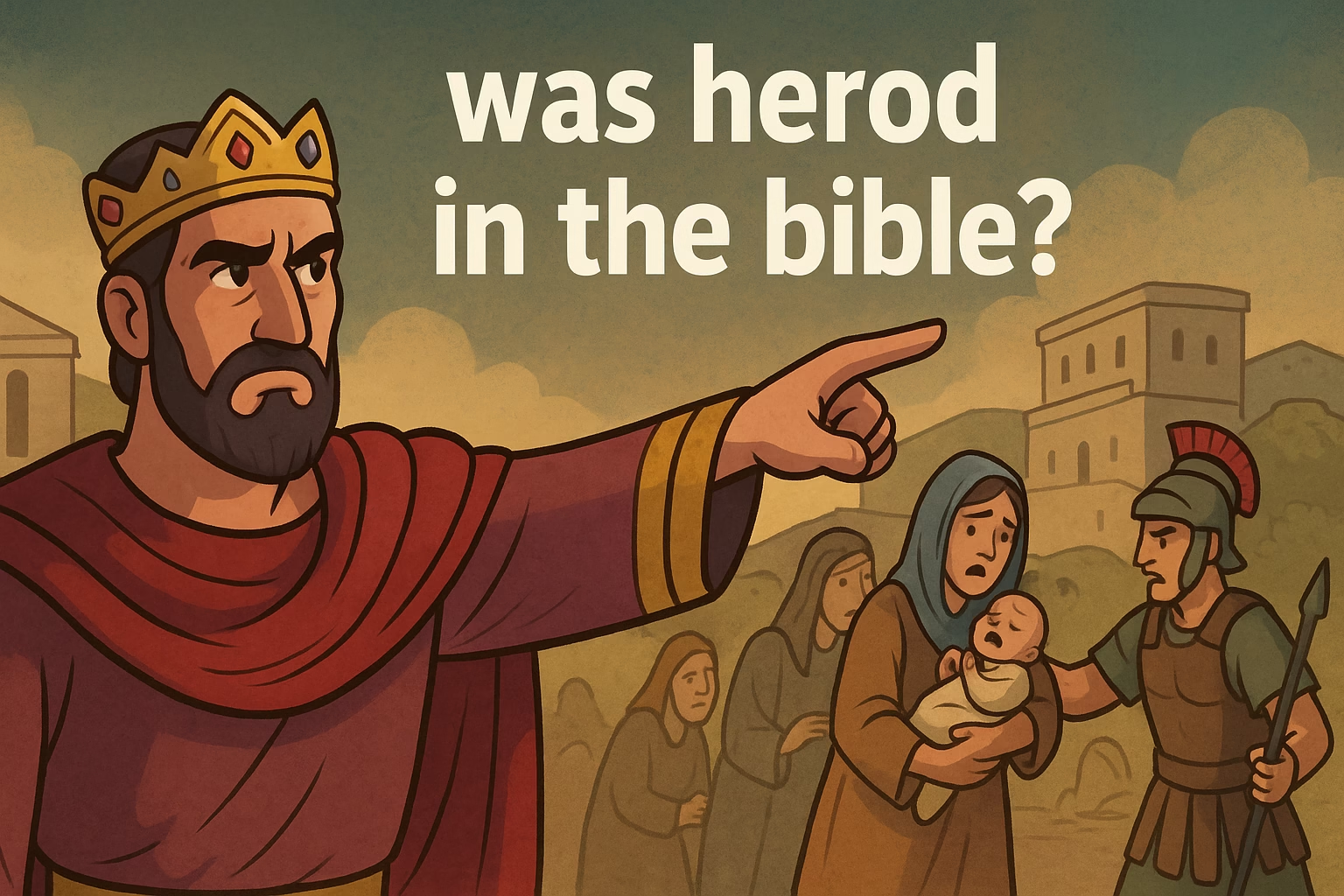
In the Bible, the name Herod refers to several rulers from the Herodian dynasty, a family that played a significant role in the history of Judea during the time of Jesus. These rulers were known for their complex relationships with the Jewish people, their political alliances, and their interactions with early Christianity. Understanding who Herod was requires looking at the various figures that bear the name and their individual contributions to biblical events.
Herod the Great is perhaps the most famous of these figures. He ruled Judea from 37 BC until his death in 4 BC. He is known for his ambitious building projects, including the expansion of the Second Temple in Jerusalem. Herod’s rule was marked by his efforts to maintain power through alliances with Rome and his often brutal methods of eliminating rivals, including members of his own family. Other Herods mentioned in the New Testament include Herod Antipas and Herod Agrippa, each of whom played a role in the narratives surrounding the life of Jesus and the early church.
Herod the Great
Herod the Great was an Idumean, born into a family that had converted to Judaism. He was appointed king of Judea by the Roman Senate and ruled with a strong hand, often using violence to secure his throne. One of the most notable events associated with Herod the Great is the Massacre of the Innocents, described in Matthew 2:16-18. After hearing from the Magi about the birth of Jesus, Herod sought to eliminate any potential threat to his rule by ordering the execution of all male infants in Bethlehem under the age of two.
This decree reflects Herod’s paranoia and ruthless leadership style. His reign was characterized by political intrigue and a desire to please both the Jewish subjects and the Roman authorities. He is credited with many impressive architectural achievements, including the renovation of the Second Temple, which became a central place of worship for the Jewish people.
Herod Antipas
Herod Antipas, one of the sons of Herod the Great, ruled as tetrarch of Galilee and Perea from 4 BC to AD 39. He is best known for his involvement in the events surrounding the ministry of Jesus and the execution of John the Baptist. The Gospels recount that Herod Antipas was intrigued by John’s preaching and sought to protect him, but he ultimately ordered John’s beheading at the request of Herodias, his wife, and her daughter Salome (Mark 6:17-28).
Herod Antipas also played a role in the trial of Jesus. According to the Gospel of Luke (23:6-12), when Jesus was brought before him, Antipas was curious to see Him perform miracles. However, Jesus remained silent before him, leading to Antipas mocking Him and sending Him back to Pilate. This interaction signifies the tension between the Jewish leaders and the Roman rulers during this period.
Herod Agrippa
Herod Agrippa I, the grandson of Herod the Great, ruled as king over Judea from AD 37 to 44. He is mentioned in the book of Acts and is known for his persecution of early Christians. In Acts 12:1-2, it is noted that Agrippa had James, the brother of John, executed. This marked a significant moment in the early church, as it showcased the growing hostility towards Christians from the Jewish authorities.
Herod Agrippa is also known for his role in the arrest of Peter. In Acts 12:3-5, the apostle Peter was imprisoned during the Passover, but he was miraculously freed by an angel. This event highlights both the power of God and the challenges faced by the early church during the reign of Agrippa.
The Herodian Dynasty and Its Impact
The Herodian dynasty is significant in biblical history for several reasons. It reflects the complex interplay between Jewish identity and Roman authority. The rulers of this dynasty were often seen as puppet kings, enforcing Roman policies while attempting to maintain a semblance of Jewish traditions. This duality created tension that is evident in the New Testament writings.
Additionally, the Herodian rulers’ actions set the stage for the early Christian movement. Their oppressive governance and the subsequent persecution of Christians contributed to the spread of the Gospel beyond Jewish communities. The early church faced many challenges, but it also experienced growth amid adversity. The narratives surrounding the Herods provide insight into the socio-political climate of the time, illustrating how these rulers shaped the events leading up to and following the life of Jesus.
Understanding who Herod was in the Bible involves recognizing the distinct roles played by these rulers and their impact on biblical history. Each Herod, with his unique story and actions, contributed to the larger narrative of the New Testament, revealing a tumultuous period in which faith, power, and conflict intersected.
The Political Landscape of Judea Under Herod
The reign of the Herods is essential for understanding the political landscape of Judea during the time of Jesus. Herod the Great, as a client king of Rome, navigated complex political waters to maintain his authority. His ability to balance local Jewish traditions with Roman expectations allowed him to remain in power, but it also created a fragile situation that would lead to unrest among the Jewish population.
Herod’s political strategies included heavy taxation and extensive building projects, which, while impressive, often burdened the local populace. The construction of the magnificent Temple in Jerusalem, for instance, was meant to win the favor of the Jews but also served to solidify his own legacy. This dual purpose caused further discontent among the Jewish people, who often viewed Herod’s rule as a betrayal of their heritage.
As the Herodian dynasty continued with Herod Antipas and Herod Agrippa, the political dynamics shifted but remained fraught with tension. Antipas’s rule in Galilee was marked by his attempts to maintain stability, yet his actions, particularly regarding John the Baptist and Jesus, demonstrated the precariousness of his position. The trial of Jesus before Antipas illustrates the collision of religious and political interests, as the Jewish leaders sought Roman authority to eliminate what they perceived as a threat to their traditions.
Theological Implications of Herod’s Actions
The actions of the Herodian rulers also carry significant theological implications within the biblical narrative. For instance, Herod the Great’s Massacre of the Innocents not only reflects his character but also serves to fulfill Old Testament prophecies, particularly in the context of the Messiah’s birth. This event draws parallels with Moses’ early life and the oppression of the Israelites in Egypt, suggesting a divine plan at work even amid human evil.
Similarly, Herod Antipas’s role in the execution of John the Baptist and his interaction with Jesus highlights the conflict between God’s kingdom and worldly power. Jesus’ silence before Antipas can be interpreted as a rejection of worldly authority and a declaration of the nature of His kingdom, which was not of this world. This moment is pivotal, as it sets the stage for the eventual crucifixion, where Jesus’ rejection by both the Jewish leaders and Roman authorities culminates in the ultimate act of sacrifice.
The Herods and Early Christian Persecution
The legacy of Herod Agrippa I is particularly noteworthy concerning the early church. His persecution of Christians illustrates the intense opposition faced by the followers of Jesus during this time. Agrippa’s execution of James and the imprisonment of Peter indicate a systematic effort to quell the growing Christian movement, which was seen as a direct challenge to Jewish authority and stability.
This persecution not only highlights the dangers faced by early Christians but also serves as a catalyst for the spread of the Gospel. Following the death of James, the disciples were forced to scatter, which ultimately facilitated the spread of Christianity beyond Judea. The struggle against oppression is a recurring theme in the New Testament, and the actions of Herod Agrippa exemplify how political power can clash with true faith.
Questions for Reflection
As we explore the figures of Herod in the Bible, several questions arise that can deepen our understanding of their significance:
- How do the actions of Herod the Great reflect the tension between faith and power? Consider how his building projects might symbolize both a desire for legacy and a means of control over the Jewish people.
- What does Herod Antipas’ interaction with Jesus reveal about the nature of Jesus’ mission? Reflect on the implications of Jesus’ silence and how it contrasts with the expectations of both Jewish leaders and Roman authorities.
- How did the persecution led by Herod Agrippa impact the early church’s growth? Think about how adversity can serve as a catalyst for spreading faith and resilience among believers.
Conclusion: The Legacy of the Herodian Dynasty
The Herodian dynasty, through its rulers, left a profound mark on the biblical narrative and the history of early Christianity. Their complex relationship with the Jewish people, their political maneuvering, and their roles in key biblical events provide a rich context for understanding the challenges faced by Jesus and His followers. The actions of each Herod illustrate the intersection of faith, power, and persecution, revealing the struggles that shaped the early church and the unfolding of God’s redemptive plan.
Ultimately, exploring the figures of Herod in the Bible invites readers to reflect on how power can influence faith and the ways in which God’s purposes can prevail even in the face of human opposition.
For further insights on related topics, visit this article about the significance of the Temple in Jesus’ time and this analysis of the early church’s challenges.