
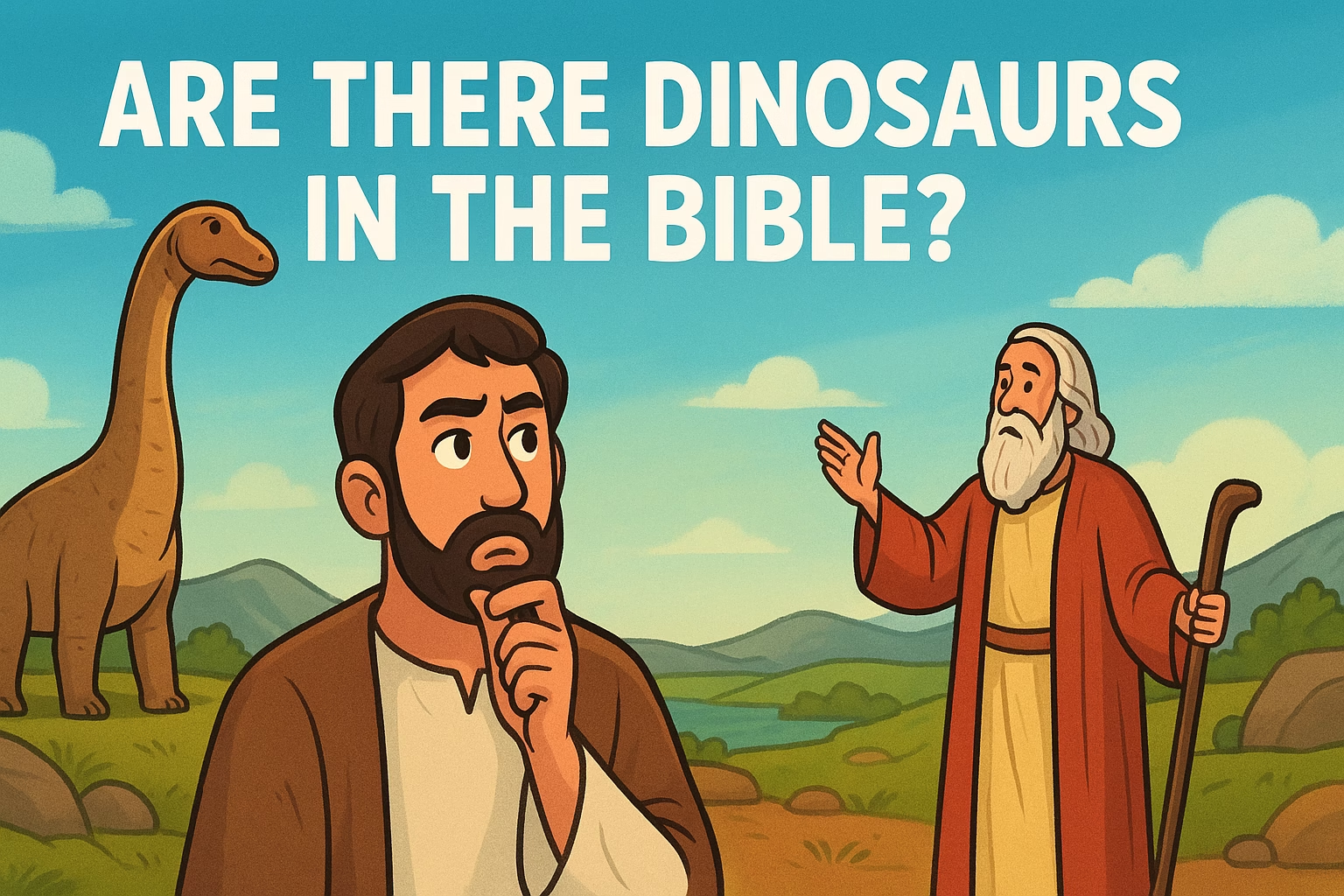
The question of whether dinosaurs are mentioned in the Bible often intrigues both believers and skeptics alike. The Bible, while primarily a spiritual and historical text, includes descriptions of various creatures that some interpret as resembling dinosaurs. Understanding these references requires a careful examination of the Scripture and its context.
To directly answer the question: while the term “dinosaur” is not found in the Bible, there are passages that some scholars and theologians believe could refer to dinosaur-like creatures. The challenge lies in interpreting ancient texts and understanding the language and terminology used during biblical times.
Understanding the Term “Dinosaur”
The word “dinosaur” comes from the Greek words “deinos,” meaning terrible, and “sauros,” meaning lizard or reptile. This term was coined in the 19th century, long after the biblical texts were written. Therefore, we must look for descriptions of large, reptilian creatures that could align with what we now understand as dinosaurs.
Behemoth: A Possible Dinosaur Reference
One of the most cited creatures in the discussion of dinosaurs in the Bible is Behemoth, mentioned in the book of Job. In Job 40:15-24, God describes Behemoth as a powerful creature that eats grass like an ox. The passage goes on to detail its physical attributes, saying it has strong muscles, a tail that sways like a cedar tree, and bones like bronze. Many interpretations suggest that Behemoth may refer to a large, prehistoric creature.
“Look at Behemoth, which I made along with you and which feeds on grass like an ox.” (Job 40:15, NLT)
Some suggest that Behemoth could represent a sauropod dinosaur, known for their massive size and long necks. However, it is essential to note that interpretations vary widely. Some scholars view Behemoth as a poetic representation of a hippopotamus or an elephant, emphasizing the literary style of Job rather than a literal description of a dinosaur.
Leviathan: Another Creature of Interest
Another creature mentioned in the Bible is Leviathan, found in Job 41. This creature is described as a fearsome sea monster, with scales that are impenetrable and the ability to breathe fire. The vivid imagery suggests a creature of immense power, and some have speculated that it could relate to large reptiles or even marine dinosaurs.
“Can you pull in Leviathan with a fishhook or tie down its tongue with a rope?” (Job 41:1, NLT)
Similar to Behemoth, interpretations of Leviathan vary. While some see it as a mythological or symbolic creature representing chaos and evil, others look for connections to real animals, including large sea reptiles like plesiosaurs. Again, the context and literary style of the text play a significant role in how we understand these descriptions.
Dinosaurs and Creation
The creation narrative in Genesis does not explicitly mention dinosaurs. However, Genesis 1:24-25 states that God created all kinds of living creatures, including “wild animals” and “livestock.” This broad categorization could imply the existence of various creatures, including those that we classify as dinosaurs today. Yet, the text does not provide detailed descriptions of specific species.
The Age of the Earth and Dinosaurs
Another aspect of the discussion involves the age of the Earth and the timeline of creation as described in the Bible. Many scientists date the existence of dinosaurs to millions of years ago, while some biblical interpretations suggest a much younger Earth based on genealogies and timelines in Scripture. This difference in understanding leads to various conclusions about whether dinosaurs and humans coexisted.
Some young Earth creationists argue that dinosaurs lived alongside humans, while others believe that the fossil record indicates a long history of life on Earth that is not directly addressed in the Bible. This divergence in interpretation highlights the complexities of reconciling scientific findings with biblical narratives.
Conclusion on Dinosaurs in the Bible
In summary, while the Bible does not explicitly mention dinosaurs, there are references to large, powerful creatures that some might interpret as such. The descriptions of Behemoth and Leviathan are often central to this discussion, but interpretations vary widely based on theological, literary, and scientific perspectives. Understanding these passages requires careful examination of the text and an awareness of the cultural and historical context in which they were written.
Further Biblical Creatures and Their Interpretations
In addition to Behemoth and Leviathan, there are other creatures in the Bible that have been discussed in the context of large, prehistoric animals. For example, the “great sea creatures” mentioned in Genesis 1:21 could also spark the imagination towards ancient marine reptiles. The phrase does not specify the type of creatures but emphasizes God’s creation of diverse life forms in the sea. This broad mention leaves room for interpretation, allowing some to consider the possibility of marine reptiles that once roamed the oceans.
Exploring Other Biblical References
Another creature that has drawn interest is the “dragon,” found in several passages throughout the Bible, such as in Isaiah 27:1 and Revelation 12:9. While these references are often interpreted symbolically, the imagery of a dragon could evoke thoughts of large, reptilian animals. In ancient cultures, dragons were often depicted as enormous, fearsome creatures, leading some to speculate that these descriptions might align with the characteristics of large reptiles.
Moreover, the mention of “serpents” and “snakes” in the Bible can also be worth examining. Although typically smaller in size, certain interpretations suggest that these could reference larger, more formidable reptiles. The serpent in the Garden of Eden (Genesis 3) is commonly viewed as a symbol of temptation and evil, but it also ties into the broader theme of reptiles in biblical texts.
Theological Implications of Dinosaurs
The inclusion of large creatures in biblical texts raises theological questions about the nature of creation. If large prehistoric creatures existed, how do they fit into the narrative of God’s creation? Some theologians argue that the existence of such creatures showcases God’s creativity and power. Others ponder the implications of extinction and the fall of creation, as described in Genesis 3. The idea that large creatures lived and died before humans could lead to discussions about the nature of sin, death, and redemption within the biblical framework.
Human Perspective on Dinosaurs
Understanding how humans relate to large prehistoric creatures through a biblical lens can also prompt deeper reflection. The fascination with these creatures in contemporary culture often emphasizes their size and power. This intrigue can lead to questions about humanity’s place in creation. Are humans stewards of creation, including the knowledge of past life forms? How does the existence of large prehistoric creatures affect our understanding of God’s plan? These questions can guide believers in contemplating their role in God’s created order.
Scientific Considerations and Biblical Interpretation
The dialogue between science and faith concerning large prehistoric creatures is ongoing. Many Christians embrace scientific discoveries about these creatures, including fossil records and dating methods, while also seeking to honor biblical teachings. The challenge lies in how to reconcile these findings with the literal interpretations of Scripture. Some believers hold to a framework where faith and scientific understanding are not mutually exclusive but rather complementary aspects of exploring truth.
For example, the theory of evolution often comes into conflict with a literal interpretation of the creation account in Genesis. Some Christians may adopt theistic evolution, which posits that God used evolutionary processes to create life, including large prehistoric creatures. This perspective allows for the acknowledgment of scientific evidence while maintaining faith in God’s ultimate role as creator.
Questions for Further Reflection
As we explore the topic of large prehistoric creatures in the Bible, several questions arise that can enrich our understanding. Consider the following:
- How do the descriptions of Behemoth and Leviathan influence our understanding of God’s creation?
- In what ways can we reconcile scientific findings about large prehistoric creatures with biblical narratives?
- What does the existence of large prehistoric creatures teach us about the nature of God and His creation?
- How can we engage with those who hold differing views on the relationship between faith and science?
- What responsibility do we have as stewards of creation in light of our understanding of the past?
Final Thoughts on Dinosaurs in the Bible
The exploration of whether large prehistoric creatures exist in the Bible is a multifaceted conversation that encompasses theology, science, and personal belief. While the biblical text does not specifically mention dinosaurs, the references to powerful creatures like Behemoth and Leviathan open avenues for interpretation. These discussions can deepen our understanding of creation and our relationship with the natural world. Ultimately, whether one sees these ancient creatures as part of God’s design or as symbols of deeper truths, the inquiry invites believers to reflect on their faith and the mysteries of God’s creation.
For more insights into the relationship between faith and science, you might find these articles helpful: understanding the coexistence of science and faith and exploring biblical creation narratives.