The concept of a “talent” in the Bible is often misunderstood, as it encompasses both a unit of measurement and a metaphor for abilities or gifts bestowed upon individuals. In exploring this term, we will delve into its scriptural roots and the various contexts in which it appears. This examination will not only clarify what a talent is in biblical terms but also highlight its significance in the teachings of Jesus and its implications for believers today.
In the Bible, a talent primarily refers to a specific unit of weight and currency used in ancient times. To understand its value, it is important to contextualize it within the economic systems of the biblical era. The word “talent” also extends to represent the abilities and gifts that God has given to each person, as seen in the Parable of the Talents, where Jesus teaches about responsibility and stewardship.
The Historical Context of a Talent
A talent was a significant measure of weight in biblical times, primarily used to quantify precious metals such as gold and silver. In the Old Testament, a talent is roughly equivalent to 75 pounds or about 34 kilograms. This unit was used in various contexts, including the construction of the Temple in Jerusalem, where talents of gold and silver were donated for its building (1 Chronicles 29:4).
Given its weight, a talent represented a substantial amount of wealth. For instance, in the New Testament, a talent of gold would be worth thousands of dollars today, making it clear that this was not merely a small sum. The sheer value of a talent emphasizes the gravity of the responsibilities that come with it in Jesus’ teachings.
The Parable of the Talents
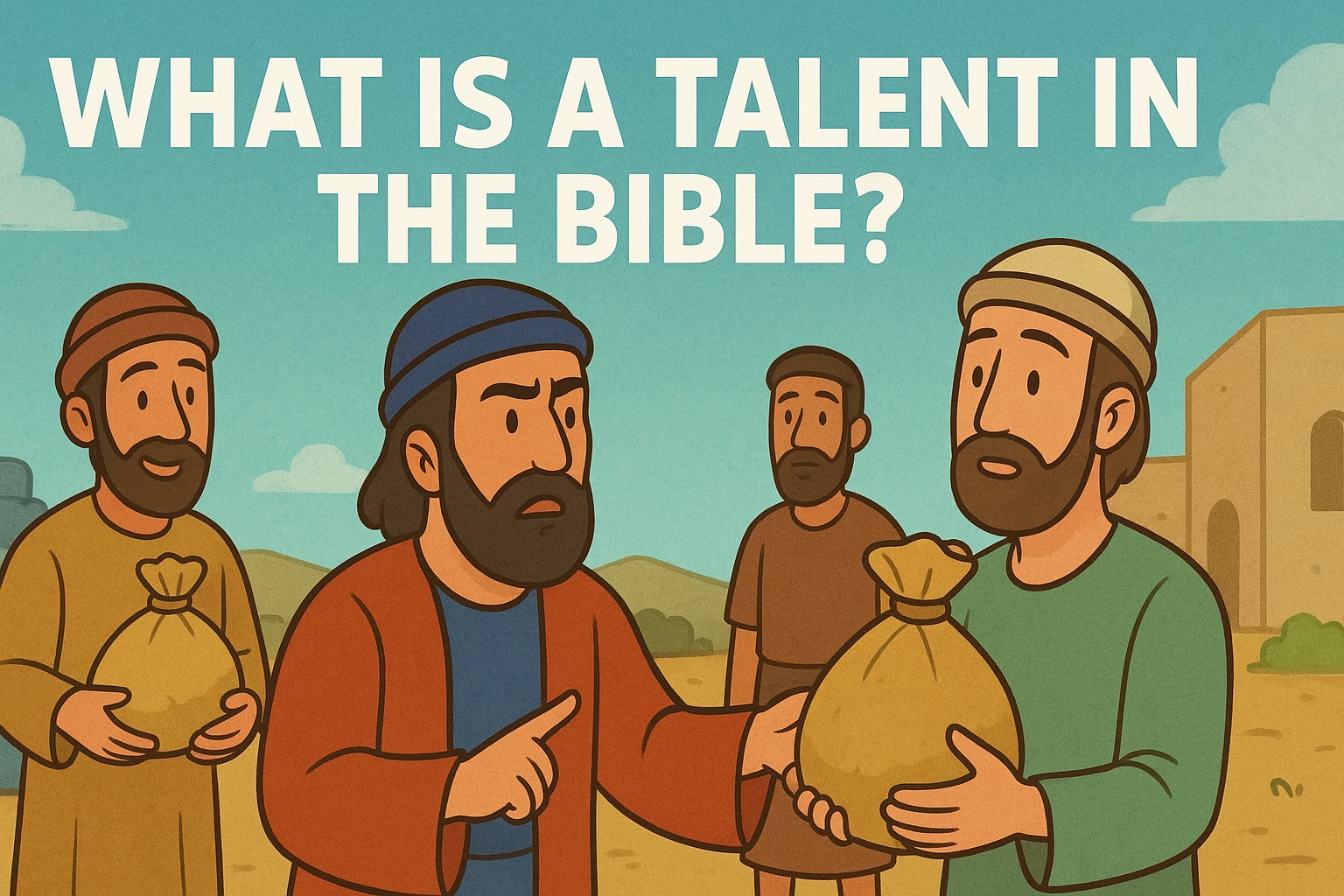
The most well-known biblical reference to talents comes from the Parable of the Talents, found in Matthew 25:14-30. In this parable, a master entrusts his servants with varying amounts of talents according to their abilities before embarking on a journey. Upon his return, he asks each servant to account for how they managed the talents given to them.
“To one he gave five talents, to another two, and to another one, each according to his ability.” (Matthew 25:15 NLT)
This parable illustrates several key points:
- God’s Gifts: Each servant receives a different amount, symbolizing that God gives each person unique gifts and abilities.
- Responsibility: The servants are expected to use their talents wisely and productively, reflecting the expectation that believers should actively use their gifts for God’s glory.
- Consequences: The servant who buried his talent instead of investing it faced severe consequences, underscoring the importance of stewardship.
The Spiritual Implication of Talents
Beyond the financial and material interpretation, the concept of talents extends to the abilities and spiritual gifts that God provides to every believer. The Apostle Paul discusses this in Romans 12:6-8, where he encourages the church to use their gifts for the benefit of others. He emphasizes that each person has been uniquely equipped to serve the body of Christ, and these talents should be actively utilized.
In Ephesians 4:11-12, Paul further explains that different roles within the church, such as apostles, prophets, evangelists, pastors, and teachers, are given for the purpose of equipping believers for service and building up the body of Christ. This reinforces the idea that talents are more than just financial resources; they encompass the diverse skills and abilities that contribute to the overall health and mission of the church.
The Importance of Stewardship
The Parable of the Talents serves as a powerful reminder of the importance of stewardship in a believer’s life. God expects His followers to be diligent in using what they have been given, whether it be time, skills, or financial resources. The master’s return signifies accountability, and the expectation is clear: believers will be held responsible for how they manage their God-given talents.
Moreover, the parable highlights the principle of multiplication. The servants who invested their talents were rewarded with even more, illustrating that when we actively use our gifts, they can grow and bear fruit for God’s kingdom. This notion aligns with the biblical principle found in Luke 16:10, where Jesus states that those who are faithful in little will also be faithful in much.
Conclusion of Part One
In summary, the biblical concept of a talent encompasses both a significant unit of measurement and a metaphor for the abilities and gifts entrusted to believers by God. Through the Parable of the Talents and other scriptural teachings, we see the emphasis placed on responsible stewardship and the expectation that each person actively uses their unique gifts for the glory of God and the benefit of others. Understanding this dual significance of talents enriches our appreciation of the biblical narrative and challenges us to reflect on how we are using our own talents in our lives today.
The Broader Biblical Usage of Talents
While the Parable of the Talents is the most explicit teaching on the subject, the broader biblical context provides additional insights into how talents are understood. In the Bible, the concept of talent is often linked to the idea of calling and purpose. Each individual is seen as having a unique role in the divine plan, and the talents they possess are tools to fulfill that purpose.
For example, in Exodus 31:1-5, God specifically chooses Bezalel and Oholiab to oversee the construction of the Tabernacle. He fills them with the Spirit of God, giving them wisdom, understanding, knowledge, and all kinds of skills needed for the task. This illustrates that talents can also be seen as divinely imparted skills necessary for fulfilling God’s work on earth. It emphasizes that God equips individuals according to His divine purpose, which extends beyond mere financial or material wealth.
Recognizing Your Talents
Understanding what talents you possess can be a journey of self-discovery. In the context of faith, this often involves prayer, reflection, and seeking guidance from the Holy Spirit. Believers are encouraged to explore their interests, passions, and skills to identify how they can serve others and glorify God.
In 1 Corinthians 12:12-27, Paul uses the metaphor of the body to describe the church, emphasizing that each believer has a unique role. Just as a body has different parts that serve different functions, so do individuals within the church. As believers seek to understand their specific roles, they can better contribute to the health and mission of the church community.
The Accountability of Using Talents
As seen in the Parable of the Talents, accountability is a central theme. The servants who were entrusted with talents were called to give an account of how they managed what was given to them. This principle of accountability extends to all believers. Each person must reflect on how they are using their God-given talents and whether they are fulfilling their responsibilities.
In Luke 12:48, Jesus teaches that “to whom much is given, much will be required.” This underscores the seriousness of stewardship. Believers are not only responsible for using their talents but also for recognizing that with greater gifts comes greater expectation. This can serve as a motivator for individuals to actively engage in their communities, churches, and the world at large.
Overcoming Fear and Insecurity
Fear and insecurity can often hinder individuals from using their talents. The servant in the Parable of the Talents who buried his talent did so out of fear of failure and a misunderstanding of his master’s expectations. Many believers struggle with similar fears, which can prevent them from actively engaging in their gifts.
It is important to remember that God does not call the equipped; He equips the called. In 2 Timothy 1:7, Paul reminds believers that “God has not given us a spirit of fear, but of power and of love and of a sound mind.” Embracing this truth can help believers step out in faith, trusting that God will provide the strength and resources needed to fulfill their calling.
Using Talents for the Common Good
Using one’s talents is not just about personal fulfillment; it also serves the greater good of the community. The New Testament encourages believers to use their gifts to build up the body of Christ and to serve others. In Galatians 5:13, Paul writes, “Through love serve one another.” This highlights the relational aspect of talents—when individuals use their abilities to serve others, they contribute to a spirit of unity and love within the community.
Moreover, talents can also be a means of outreach. When believers use their gifts to serve others, it can open doors for sharing the gospel and demonstrating God’s love. For instance, a talented musician may use their skills in worship, while a gifted teacher may lead Bible studies. Each talent has the potential to impact others positively and draw them closer to God.
Conclusion
The biblical concept of a talent encompasses not only a unit of wealth but also a rich metaphor for the abilities and spiritual gifts that God bestows upon individuals. From the historical context of talents as currency to the spiritual implications of stewardship, believers are called to recognize, develop, and use their talents responsibly. By doing so, they honor God, serve their communities, and contribute to the mission of the church. Reflecting on how we use our talents can lead to a deeper understanding of our purpose and a more fulfilling walk of faith.
For more insights on discovering and using your spiritual gifts, you can explore articles about understanding spiritual gifts and effective stewardship.