
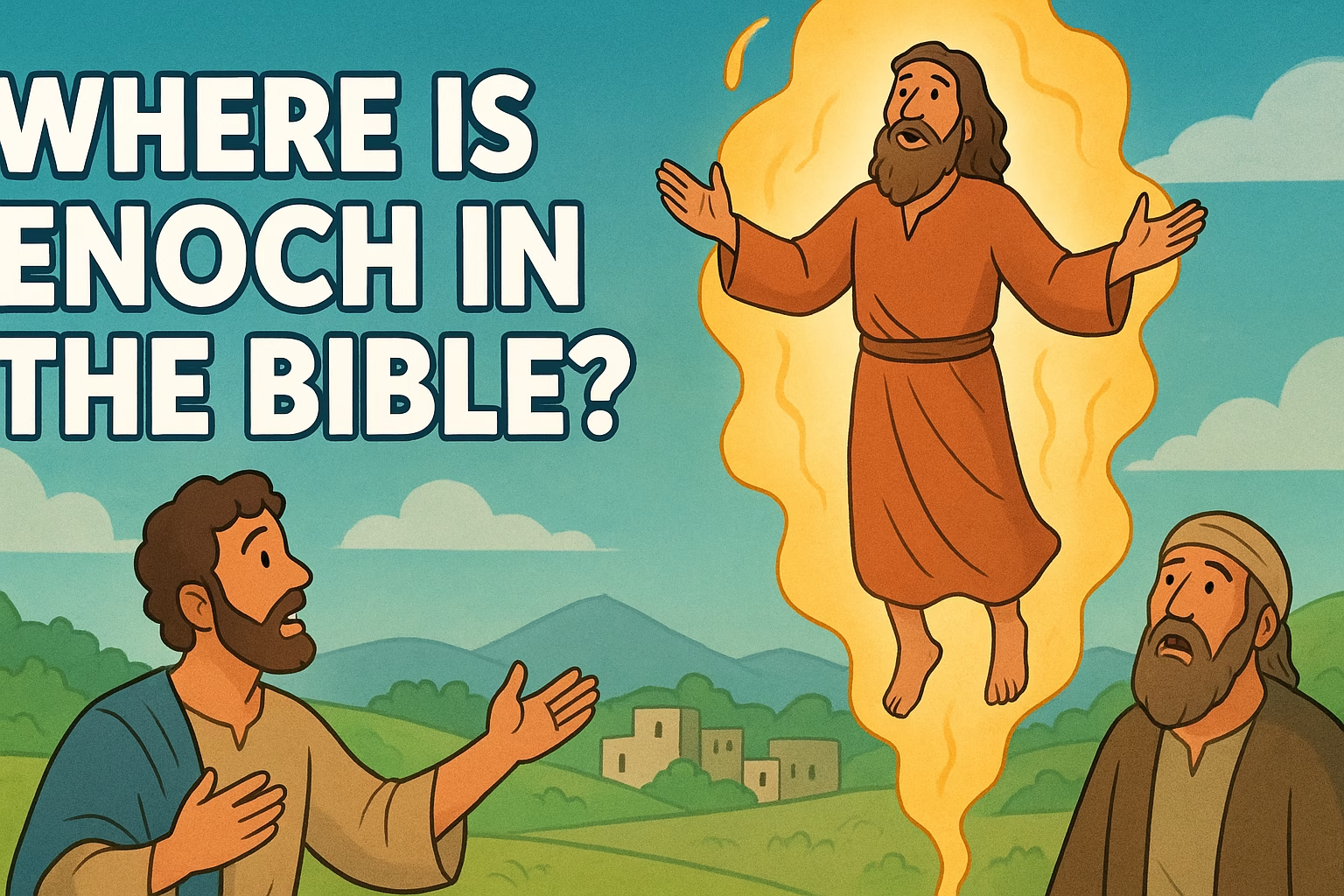
The figure of Enoch is an intriguing one in the Bible, often sparking curiosity and discussion among readers. His story offers insight into early biblical history and the nature of faith. In this article, we will explore where Enoch can be found in the Scriptures and what significance his life holds within the biblical narrative.
Enoch appears in a few key passages in the Bible, primarily in the Old Testament. Most notably, he is mentioned in the genealogies of Genesis and has a significant reference in the New Testament. Understanding these passages will help clarify who Enoch was and his role in the biblical text.
Enoch in Genesis
The Genealogy of Adam
Enoch is first introduced in Genesis 5, which provides a genealogy from Adam to Noah. He is the seventh generation from Adam, the son of Jared, and the father of Methuselah. In Genesis 5:21-24 (NLT), it states:
“When Enoch was sixty-five years old, he became the father of Methuselah. After the birth of Methuselah, Enoch lived in close fellowship with God for another three hundred years and had other sons and daughters. Enoch lived a total of three hundred sixty-five years, walking in close fellowship with God. Then one day he disappeared, because God took him.”
This passage highlights a few key points about Enoch. He lived for 365 years, which is notable because it is one of the shortest lifespans recorded in the genealogy of Adam. More importantly, the text emphasizes that Enoch “walked in close fellowship with God.” This phrase indicates a deep, personal relationship with God, setting Enoch apart from many of his contemporaries.
Significance of Enoch’s Walk with God
Enoch’s relationship with God is a central theme in his narrative. The phrase “walking with God” suggests a life of obedience, faith, and trust in God’s ways. Unlike many others during his time, who became increasingly corrupt and distanced from God, Enoch maintained a righteous path. This distinction is significant, especially in the context of Genesis, where the world was filled with wickedness prior to the flood.
His disappearance, as noted in the text, is also a point of interest. The statement that “God took him” implies that Enoch did not experience death in the conventional sense. This unique aspect of his story has led to various interpretations and has raised questions about the nature of his relationship with God.
Enoch in the New Testament
Reference in Hebrews
Enoch is also mentioned in the New Testament, specifically in Hebrews 11:5 (NLT), which says:
“It was by faith that Enoch was taken up to heaven without dying—’he disappeared because God took him.’ For before he was taken up, he was known as a person who pleased God.”
This reference underscores Enoch’s faith and his pleasing relationship with God. The author of Hebrews highlights that Enoch’s faith was a key factor in his being taken up to heaven. This further cements his role as an exemplar of faith in God’s promises, reinforcing the idea that a relationship with God is foundational to a life of righteousness.
Jude’s Reference to Enoch
Another significant mention of Enoch occurs in the book of Jude, specifically Jude 1:14-15 (NLT):
“Enoch, who lived in the seventh generation after Adam, prophesied about these people. He said, ‘Listen! The Lord is coming with countless thousands of
Enoch in Other Biblical Texts
Aside from the primary references in Genesis, Hebrews, and Jude, Enoch’s name appears in various contexts throughout the Bible. These additional mentions contribute to a broader understanding of his significance and the themes associated with his life.
Enoch in the Book of Sirach
The Book of Sirach, also known as Ecclesiasticus, is a part of the Apocrypha and is included in some Christian traditions. In Sirach 44:16, Enoch is celebrated as a righteous man who was taken up so that he would not see death. This text reinforces the theme of Enoch as a model of virtue and highlights the belief that his life was exemplary, setting a standard for future generations.
The Enochic Literature
There are also non-canonical texts known as the Enochic literature, which includes the Book of Enoch. While not included in the canonical Bible, these writings offer fascinating insights into Enoch’s character and his prophetic role. This literature elaborates on Enoch’s visions and teachings, portraying him as a mediator between God and humanity. It presents Enoch as a prophetic figure who warns of impending judgment, thus emphasizing the seriousness of living a life aligned with God’s will.
Theological Implications of Enoch’s Life
Enoch’s life and experiences raise several theological questions and implications for believers today. His unique relationship with God serves as a model for how Christians might pursue their own faith journeys.
The Nature of Faith and Righteousness
One of the critical themes surrounding Enoch is the nature of faith and righteousness. Enoch’s life exemplifies a deep trust in God and a commitment to living righteously in a world that was largely corrupt. This highlights the importance of maintaining faith and integrity, even in challenging circumstances. Believers are encouraged to reflect on their own lives and consider how they can cultivate a closer relationship with God.
The Concept of Divine Favor
Enoch’s being taken by God without experiencing death raises questions about divine favor and the nature of God’s relationship with humanity. It invites readers to contemplate what it means to be pleasing to God. Enoch’s life serves as a reminder that a genuine relationship with God can lead to profound spiritual experiences and divine favor.
Living in a Corrupt World
In the context of Enoch’s time, where wickedness was rampant, his story encourages believers to remain steadfast in their faith. Enoch’s example shows that it is possible to walk closely with God despite societal pressures and moral decay. This aspect of his narrative prompts Christians to consider how they can be a light in their communities and strive for righteousness in their own lives.
Questions for Reflection
As we consider Enoch’s life and the lessons derived from it, several questions arise that may guide personal reflection and study:
- What does it mean to “walk with God” in today’s context?
- How can Enoch’s example inspire us to deepen our faith and relationship with God?
- In what ways can we remain faithful in a world that often diverges from godly principles?
- What are the implications of Enoch being taken up to heaven for our understanding of life after death?
These questions encourage believers to engage with Enoch’s story on a personal level and to draw lessons that are applicable to their own spiritual journeys.
Conclusion: Enoch’s Enduring Legacy
Enoch’s brief yet impactful presence in the Bible serves as a powerful reminder of the possibility of a deep relationship with God. His life exemplifies faith, righteousness, and the hope of eternal life. By studying Enoch’s narrative and the context in which it is presented, Christians can find inspiration to pursue their own walks with God. Enoch stands as a testament to the importance of living a life that is pleasing to God, encouraging believers to strive for a close, personal relationship with their Creator.
For more detailed insights into the significance of Enoch in biblical history, you can explore this article that delves into the broader implications of his life and teachings, or check out this resource for a deeper understanding of the Enochic literature and its impact on Christian thought.